



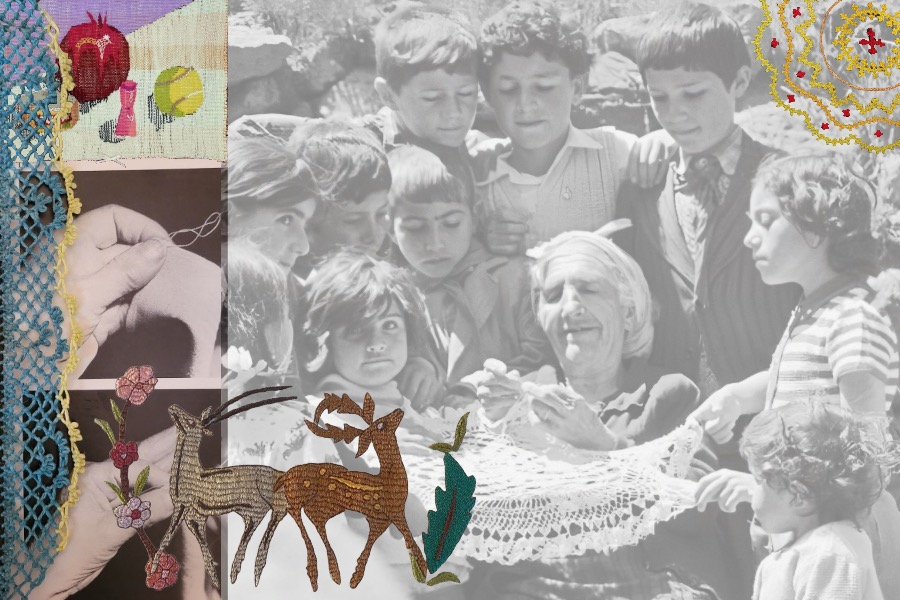
Not too long ago, there was a time in Armenia’s history where nearly every woman, regardless of age or region, carried the knowledge of fine needlework in her hands. Reaching its peak in the Middle Ages and flourishing through the 19th century, distinct regional schools of embroidery emerged, such as Van-Vaspourakan, Cilicia and Syunik-Artsakh. Each was characterized by unique materials and specific stitching techniques, often named after the region of origin, such as “Van’s thread” or â


My Mother, Zabel Arakelian, also learned Armenian embroidery in suburban Detroit, Michigan beginning in the 1970’s and taught the techniques to local women, Armenian and non-Armenian. We have many items of Marash embroidery in her home, and she also donated some pieces to ALMA in Boston years ago. It would be a lost art without such women as profiled in your article. I hope to donate more of her work to Armenian museums.
Unfortunately I did not learn, nor did I carefully preserve her drawing and patterns, a treasure in themselves.