



Why is Baku waging a “war of words” against Tehran?

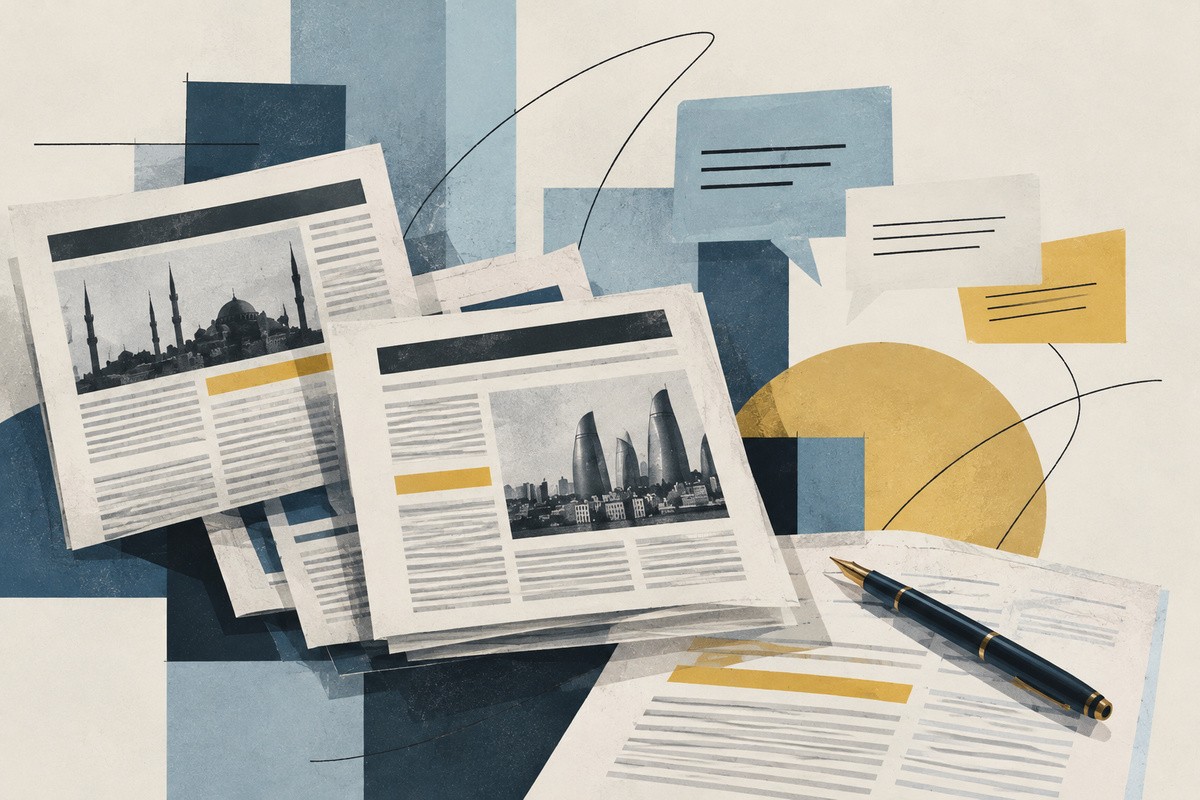
During a meeting with Russian President Vladimir Putin and Turkish President Recep Tayyip Erdogan in Tehran on July 19, the Iranian Supreme Leader Ali Khamenei warned against blocking the Armenian-Iranian border, stating, “If there is an effort to block the border between Iran and Armenia, the Islamic Republic will oppose it because this border has been a communication route for thousands of years.” After this warning, Turkish and Azerbaijani media started paying more attention to Iranian officials and launched a “war of words.”
In response to media provocations and threats toward Armenia launched by Azerbaijan, Iran facilitated the appointment of a Consulate General in Syunik to redraw its “red lines” in the South Caucasus. The following analysis will highlight the background of the recent tension between Baku and Tehran and analyze the advantages of opening a Consulate General in Syunik for both Armenia and Iran.
Background

Outstanding analysis of a very complex international cross-roads and regional problem. Thank you!
Personally, I see the North-South axis as vital to the survival of Artsakh, and a critical counter-force to the East-West axis. This is no longer merely an internal USSR issue or a post-Soviet local issue.
Yeghia….. your analysis are a tremendous asset in keeping our global nation informed.
Thank you for your contributions. The role of Iran is critically important to Armenia.
Persian nationalists can’t stand the name “Azerbaijan North” a stolen name without Persian civilization is not real Aterpatekan. They are the leftovers of Central Asian invaders, who forcefully Turkified the local Iranian minorities such as Talysh and many more.
Stealing the name “Azerbaijan” from the Persians was deliberate and part of a pan-Turkic political scheme cooked up jointly by so-called “Azerbaijani” and Turkish criminal politicians for their fascist pan-Turkic separatist agenda. This name is the transformation of the name of Atropatane which refers to a territory inside Iran. Therefore, any reference to “Azerbaijan”, hence Atropatane, is a reference to territory inside Iran to the south of the Araxes River. What this means is that NO PLACE with this name ever existed in the South Caucasus to the north of the Araxes River. Today’s so-called “Azerbaijan republic” in the South Caucasus was an artificial creation of the Soviets, along with their criminal Turkish collaborators, for the former homeless Caucasian Muslim Tatars, and renamed to “Azerbaijan” only in 1936 despite protest from the Iranian government. With the collapse and the defeat of the Ottoman Empire at the end of WWI in 1918, this artificial “Azerbaijan republic” was invented as a Turkish outpost in the South Caucasus to pursue pan-Turkic criminal agenda and as a base for the Soviet expansion into Persia and the Middle East.
With the invention of this artificial “Azerbaijan republic” in the South Caucasus, the idea behind this Turkish-Azerbaijani scheme was to claim this newly-invented artificial republic as “North Azerbaijan” and the Iranian provinces in the Northwest bearing this name and stolen by them as “South Azerbaijan”. Ever since, they have brainwashed their politically-ignorant and gullible racist populations into believing this falsehood. In 1945 together with the Soviets they made an attempt to seize Iranian territory in the Northwest when the Shah of Iran was on exile temporarily but they failed. To this day there are probably thousands of separatist “Azerbaijani” political prisoners rotting in Iranian prisons and rightfully so!