


FeaturedCultureHeadlines

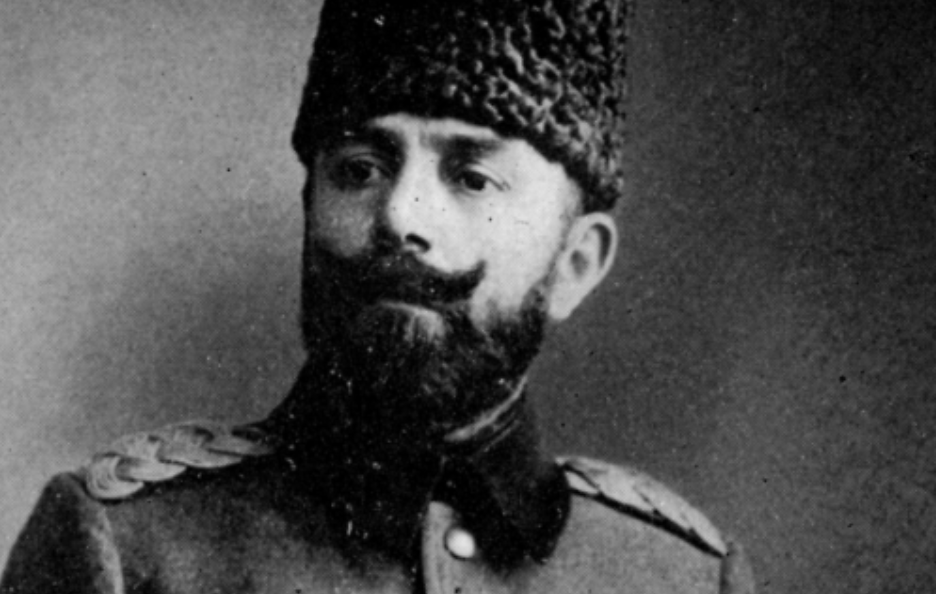
‘Memories of a Turkish Statesman—1913-19’: A Reflection on Cemal Pasha’s Memoirs

From the Armenian Weekly 2016 Magazine Dedicated to the 101st Anniversary of the Armenian Genocide “[As] however, in spite of all the help given, our foreign enemies point to me as morally responsible for these occurrences, and that caricature of a government which has been set up at Constantinople since the Armistice even went so far as to condemn me to death on an accusation of moral guilt for these banishments and butcheries, I regard it as a just means of self-defense to give some ex

Already a subscriber?Log in here

This story is FREE for you...

Create a free account to access this and four more articles, and get more sent to you with our e-newsletter.

Or, subscribe now for unlimited access
By submitting your email address you agree for Hairenik Association, Inc. to send you communication by email.

Varak Ketsemanian

Varak Ketsemanian is a graduate of the American University of Beirut (AUB) and the University of Chicago’s Center for Middle Eastern Studies (2014-2016). His master’s thesis titled “Communities in Conflict: the Hunchakian Revolutionary Party 1890-1894” examines the socio-economic role of violence in shaping inter-communal and ethnic relations by doing a local history of the Armenian Revolutionary Movement in the Ottoman Empire. Ketsemanian’s work tackles problems such as the development and polarization of mainstream historiographies, inter-communal stratifications, nationalism, and the relationship of the Ottoman State with some of its Anatolian provinces. He is currently completing a PhD at Princeton University, where his doctoral dissertation will focus on the social history of the National Constitution of Ottoman Armenians in 1863, and the communal dynamics/mechanisms that it created on imperial, communal, and provincial levels. Ketsemanian’s research relates to the development of different forms of nationalism in the 19th and 20th centuries, revolutionary violence, and constitutional movements.

One Comment

  1. Dear Varak,
    Thank you for your article about Cemal Pasha’s memoirs written between 1919 and 1921 and translated into English and published in 1922. WOW! So he didn’t know about the plans for deportation aka annihilation. How interesting. And then to know how he helped the devastated Armenian communities in Adana after one of the most “gruesome atrocities” in human history really is a new one. How come Armenians whose books I’ve read never mentioned him with his sleeves rolled up helping the Armenians. Because he didn’t help at all. Let us not forget his visit to Antoura orphanage in Lebanon where the Armenian children were made to stand at attention on their skeletal legs after being beaten and starved to greet the great pasha. I’ve had enough of mass murderers, Talaat included, painting totally bogus accounts of their activities during the Genocide. You’ve written a thought provoking article. Well done!
    Ellen Sarkisian Chesnut

Leave a Reply

Your email address will not be published. Required fields are marked *


Back to top button