


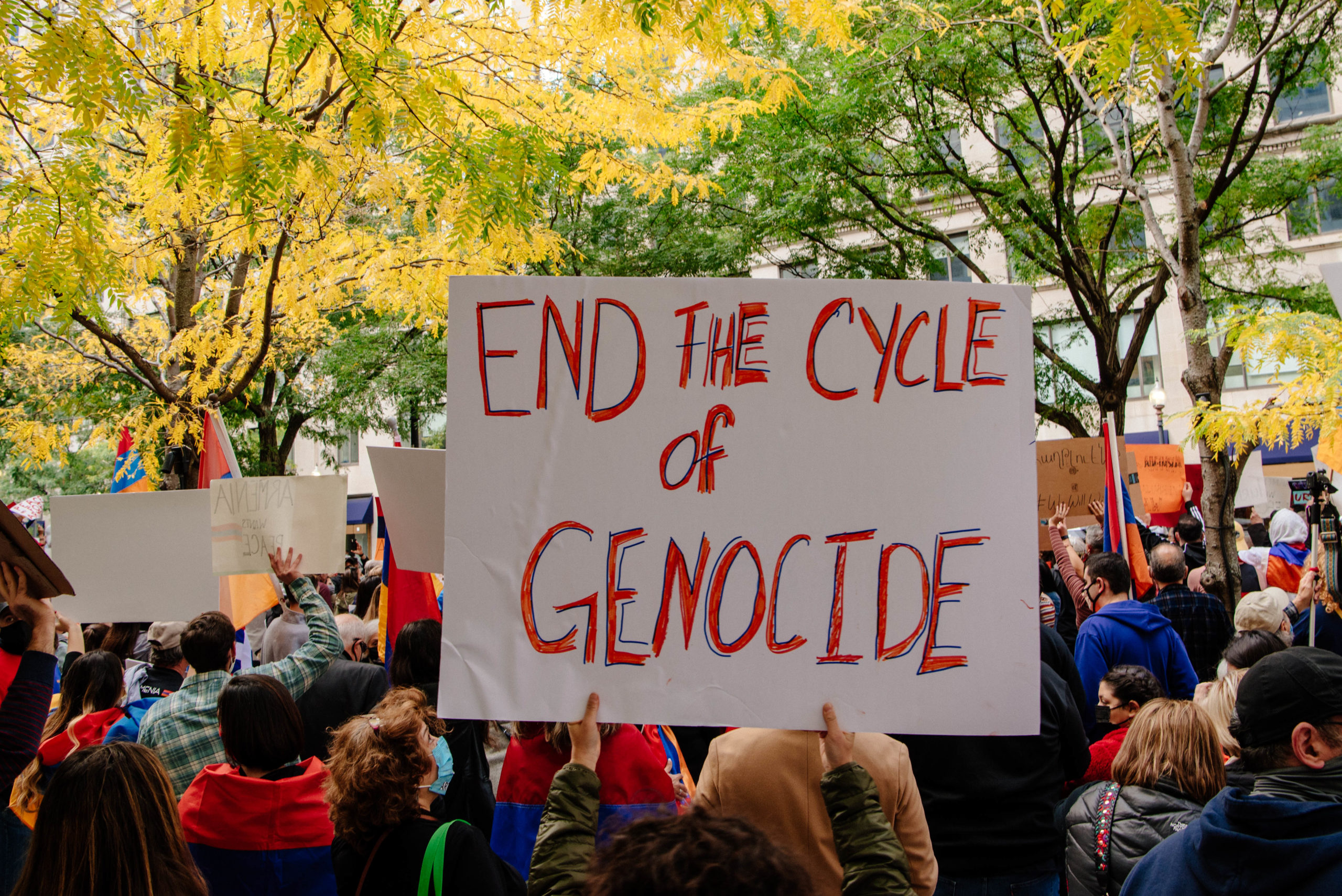
When conducting a long-term campaign for human rights and justice, the messaging must be clear and consistent. Over the decades, we have used different slogans, but the objective has always been about formally recognizing the crimes committed against the Armenian people and the criminal party paying some form of restitution to the victim. There have been legal arguments centered around the crime of genocide according to the UN Convention, and there have been political positions that attempt to gain support based on the geopolitical behavior of the Republic of Turkey. Some of our most enduring messaging has been directed toward world humanity as global citizens. That message has been simple and direct – a genocide unrecognized or ignored can lead to another. The most prominent example, of course, has been the quotation attributed to Hitler explaining that they could proceed with the assault on Poland and the Jews because no one remembers the Armenians. What Hitler was cynically referring to is that the Turks planned and implemented the attempted extermination and that 20 years later, the world had moved on with the crime unpunished. In this message, the Armenians have been trying to tell the world that as long as the violator is free, others will be emboldened to commit the worst of the human rights offenses. It happened in Cambodia, Rwanda, Darfur and Bosnia to name a few while the world sat by unable or unwilling to prevent these atrocities in a shameful display of ineptness. While Armenians quietly would respond with ”I told you so” as if the world needed more massacres to prove the point, a more personal reflection of this position has begun to emerge in our community.
The traditional definition of the Armenian Genocide is that it occurred from 1915 to 1923. Some scholars and activists began to discuss the Hamidian massacres of 1894 to 1896 and the Adana massacres in 1909 as evidence of an oppressive continuum. The mass atrocities against Armenians were directed from the central government in response to European pressure for reform, and Pan Turkic sentiments governed policy. It is clear that the fundamental strategy of the Turks with regards to Armenians has not changed appreciably in over 125 years. Driven by a deep-rooted hatred and a desire to eliminate what they view as an obstacle to Pan Turkic endeavors, the hostile policy has continued unabated through successive eras, political structures and governments. The genocide of the Armenians during and after WWI was driven by a desire to purge Anatolia (and the Caucasus) of non-Turkic peoples. The Kurds were initially exempted as “mountain Turks.”