


Why do we call each other “Unger”?
Walk into any AYF-YOARF meeting, Seminar or chapter event, and you will hear it: “Parev, Unger.” “Thank you, Ungerouhi.” “Come on, Ungers!”
For many AYF Juniors, unger is one of those words we use so naturally that we rarely stop to think about what it actually means. Maybe a junior adviser called you unger at your first Junior meeting years ago. Maybe you heard other Seniors saying it and eventually started saying it too. It becomes part of the language of AYF almost without explanation. But why do we call each other “unger”? The answer reaches much further back than the AYF itself.
 The Armenian word ընկեր — unger — means friend, companion or comrade. Its roots stretch back to Old Armenian. Etymologically, the word has been connected to the idea of a “table companion,” or someone with whom you eat — essentially, someone with whom you share your bread. Over time, unger came to mean a friend or companion, but that original idea of people sharing something together remains a powerful way to understand the word.
Long before there was an AYF Junior Seminar, a Senior Olympics weekend or a Detroit “Kopernik Tandourjian” chapter meeting, Armenians were using this word to describe a relationship built around companionship. Eventually, unger also became closely connected to Armenian political and organizational life. Within the Armenian Revolutionary Federation, the word has traditionally been used to address fellow members as comrades. It carries an idea that is important to understanding the culture the AYF inherited: people united not because they are identical, but because they share a commitment to something larger than themselves.
That history matters because the creation of the AYF was itself rooted in a question of shared responsibility. After the Armenian Genocide and the upheavals of the early 20th century, thousands of Armenians were rebuilding their lives throughout the United States. As it became increasingly clear that many families would remain in the diaspora, Armenian communities faced a difficult challenge: How could they build new lives in America without losing their Armenian identity?

Young Armenians were already organizing locally. According to AYF-YOARF Eastern Region historical records, groups including the Abrilian Sanner, the Hyortiks of New York, the Gaidzags, the Raffis and the Arams of Worcester had formed in Armenian communities across the country. They had different names and lived in different places, but they shared a desire to preserve Armenian identity and work toward the Armenian national cause.
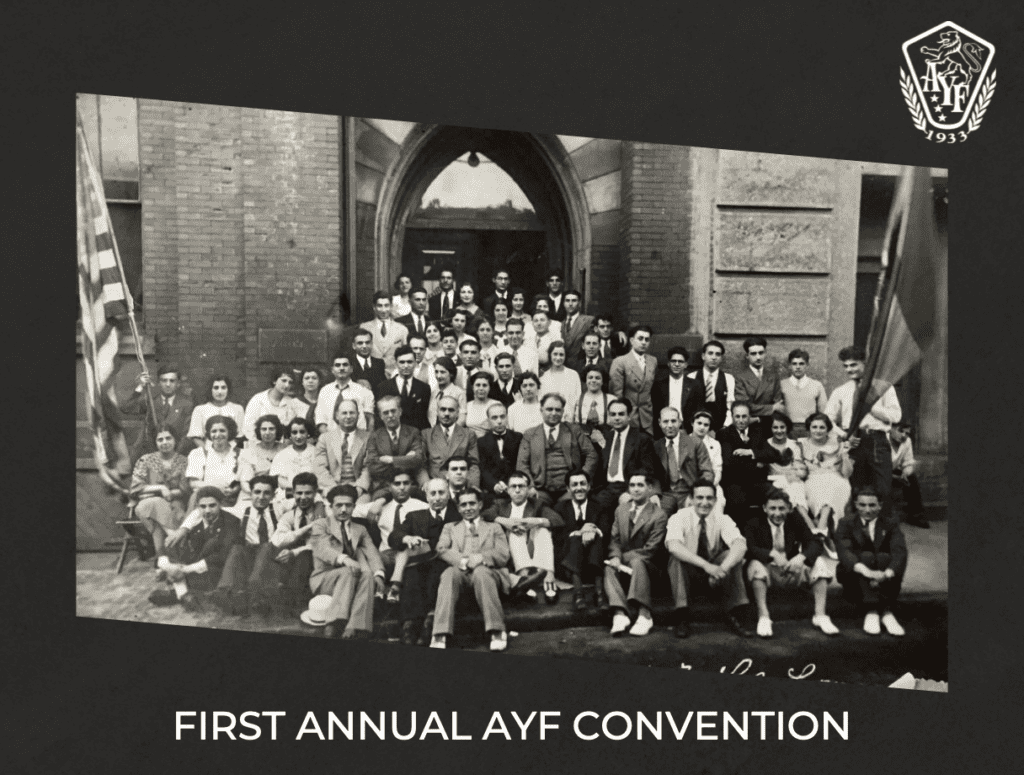 On Jan. 14, 1933, the ARF Central Committee of America decided to bring these efforts together by establishing a national Armenian youth organization. That summer, 40 young Armenians representing Boston, Brockton, Chelsea, Lawrence, Lynn, Watertown, Whitinsville and Worcester gathered at the old Hairenik Hall in Boston to discuss creating a unified organization. By the first convention in 1934, 40 chapters were represented. The organization was initially known as the ARF Tzeghagrons before officially becoming the Armenian Youth Federation in 1941.
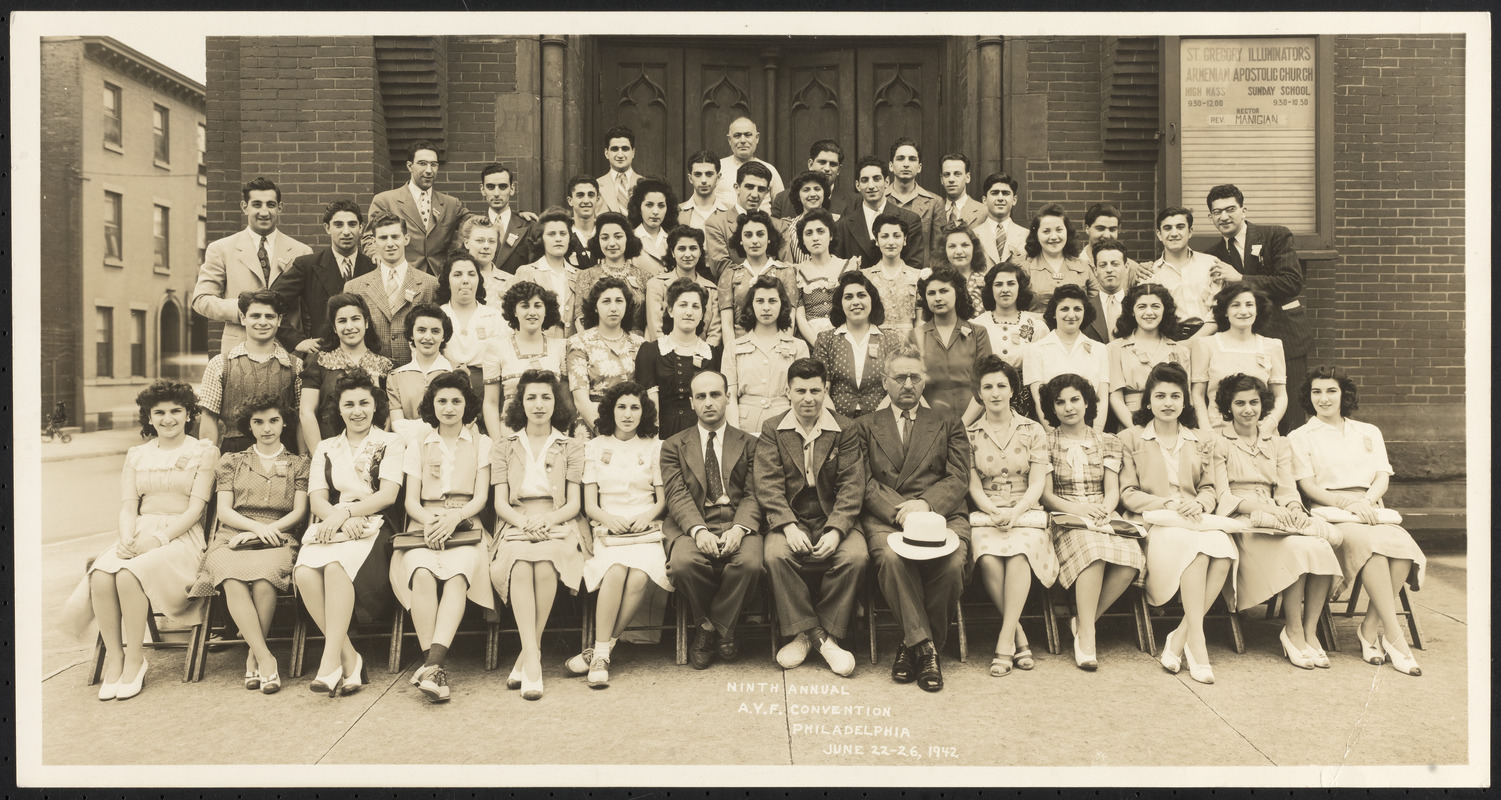
Those early members did many things that would still look familiar to an AYF member today. They held educational programs, studied Armenian history, learned Armenian national and revolutionary songs, participated in athletics and built friendships across communities. The first AYF Olympics took place in Brockton in 1934. During the 1940s, AYF members organized essay contests and educational programs, and the organization developed its “Blue Book” educational series. Through all of it, they were ungers.
The word was more than a friendly greeting. It represented the idea that these young Armenians were responsible for one another and for the future of their community. That responsibility became especially visible during World War II. AYF records estimate that more than 1,000 members served in the U.S. armed forces. Chapters stayed connected with their ungers overseas by sending letters, newspapers, local news, care packages and presents. Forty AYF members lost their lives during the war. Different generations. Different circumstances. But one lesson remains recognizable today: You do not forget your ungers.
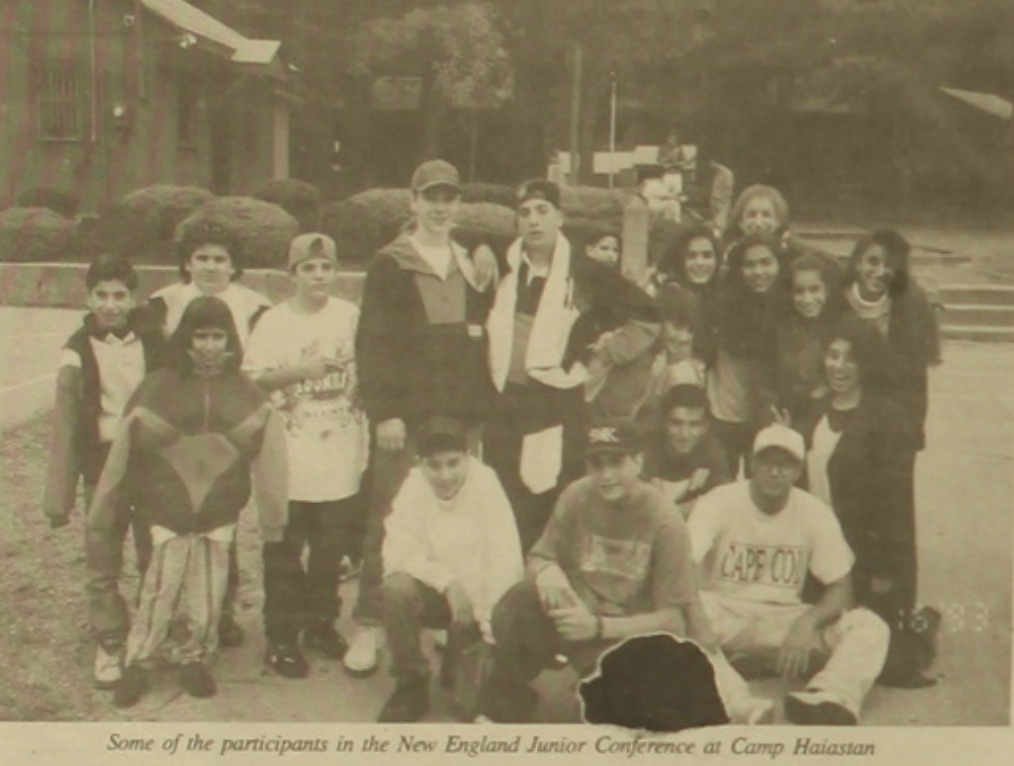
In 1948, that tradition was formally extended to a younger generation with the creation of the AYF Juniors. The Junior movement quickly grew, developing its own educational program, Olympics, conferences, essay contests and other activities. Just three years later, AYF Camp Haiastan opened in Franklin, Mass., creating another space where generations of Armenian youth would meet, learn and build relationships with one another.
More than 75 years later, today’s AYF-YOARF Juniors are part of that same story. That is easy to forget when you are simply hanging out with your friends at Senior Seminar, running a relay at JAG, sitting through a Greater Boston “Nejdeh” chapter meeting or traveling to the New Jersey “Arsen” community for its annual dance. In those moments, AYF may not feel particularly historic. But think about what is actually happening.
 A Junior from Boston can meet a Junior from New Jersey, Detroit, Providence, Philadelphia or another chapter and almost immediately have something connecting them. They may have never met before. They may come from completely different Armenian families. They may know different amounts of Armenian. They may have different opinions, personalities and experiences. And yet they can call each other unger.
That is what makes the word different from simply saying “friend.” Your unger does not necessarily have to be your best friend. Being ungers means recognizing that we share something even when we are different.
It means that the Junior standing alone at their first regional event is someone you should introduce yourself to. It means cheering loudly for your own chapter while still being able to shake another Junior’s hand when they win. It means helping the younger Junior who is nervous about competing at JAG. It means not deciding that someone is less Armenian because they do not speak Armenian fluently, did not grow up attending every Armenian event or are still learning about their heritage. It means showing up for your chapter when help is needed. It means listening to each other. It means disagreeing without forgetting that we still belong to the same community.
Most importantly, it means understanding that AYF is not only about what we receive from the organization. It is also about what we owe to one another. That is a big responsibility to attach to one small word. But perhaps that is exactly why the word has lasted.
 There will eventually be a last Junior Seminar for every member. There will be a last JAG, a last Junior meeting and a moment when today’s oldest Juniors become AYF Seniors and, later, leaders of their Armenian diasporan communities. Some will become junior advisers. Some will serve on chapter executives or regional bodies. Some may eventually become members of the ARF. Others will serve the Armenian community through churches, schools, nonprofits, advocacy organizations or in ways that do not exist yet.
And eventually, another 9- or 10-year-old will walk nervously into their first AYF Junior meeting. Someone will welcome them. Someone will teach them our songs. Someone will explain what JAG is. Someone will tell them about Junior Seminar in 1989 or 2011. And sooner or later, someone will probably call them unger.
That is how traditions survive — not because we repeat words simply because the people before us repeated them, but because every generation chooses to give those words meaning again. Today’s Juniors inherited unger from generations of Armenian youth who came before us. But inheriting the word is the easy part. Our responsibility is to live up to it.
Because unger is not simply what we call each other. It is a reminder that we belong to something together. It is a reminder that another Armenian’s success can be something we celebrate, that another Armenian’s struggle can be something we help carry and that the future of our community cannot rest on one person, one chapter or one generation.
For more than 90 years of AYF history, young Armenians in America have stood beside one another as ungers. Now it is our turn to decide what that word will mean for the generation that comes after us. Ungeragan Cherm Parevnerov, Unger.