



Finding our way home: Armenian Genealogy Conference returns to Watertown for 10th anniversary
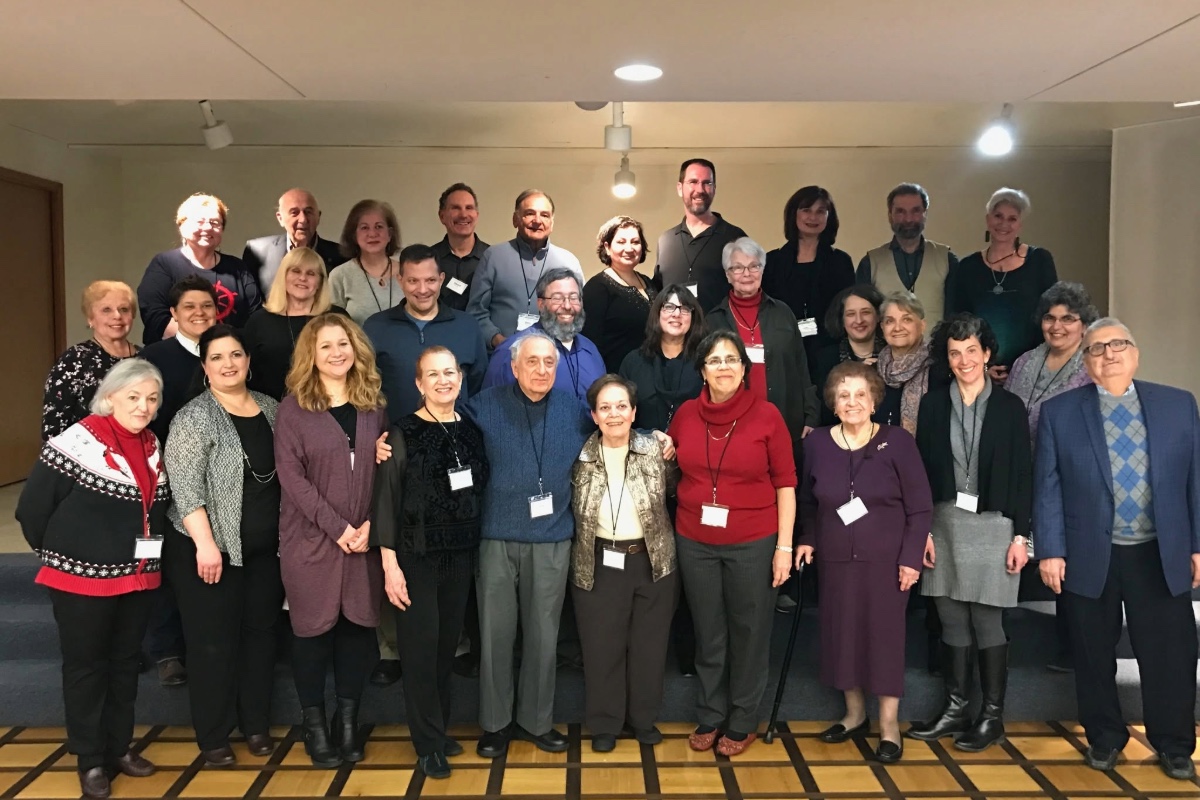
WATERTOWN, Mass. — Ten years ago, hundreds of Armenians gathered in Watertown with questions that had often lingered in their families for generations: Where, exactly, did our grandparents come from? What happened to relatives separated by genocide, migration and upheaval? Where can we find records that survived? And can DNA, photographs, immigration documents and newly accessible archives help reconnect branches of families scattered across the world?
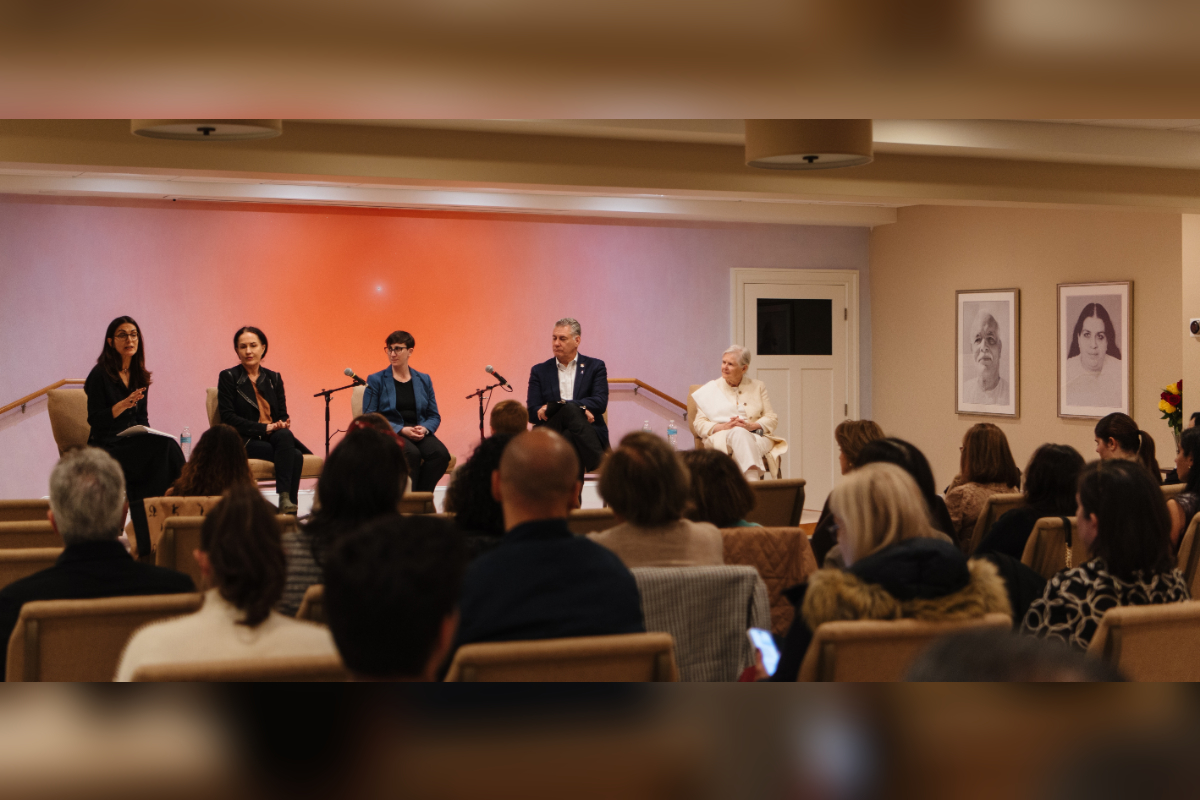
On Saturday, Nov. 21, 2026, the Armenian Genealogy Conference will return to the Armenian Cultural and Educational Center (ACEC), 47 Nichols Ave. in Watertown, to celebrate its 10th anniversary — returning to the very place where the first conference was held in 2016.
Sponsored by the Armenian Cultural Association of America (ACAA), this year’s conference will bring together researchers, historians, genealogists and individuals simply curious about their own family stories for a full day devoted to discovering, documenting and preserving Armenian family history.
And no previous genealogy experience is necessary.
Whether someone has already traced a family tree back several centuries or has little more than the names of four grandparents and the villages they supposedly came from, the conference is designed to offer practical tools, new sources and, perhaps most importantly, new avenues of discovery.

Registration and additional information are available at ArmenianGenealogyConference.com.
A movement that began in Watertown
The Armenian Genealogy Conference traces its origins to an online community created in 2013, when Tracy Rivest Keeney founded the Armenian Genealogy Facebook group. The group connected Armenians around the world who were trying to locate records, decipher documents, translate family material and identify long-lost relatives.
Three years later, George Aghjayan, Tracy Rivest Keeney and Mark Arslan organized the first Armenian Genealogy Conference in Watertown.
The response demonstrated just how deep the desire was within the Armenian community to recover family histories that many had assumed were permanently lost. More than 300 people attended the inaugural conference at the ACEC in April 2016, with participants traveling from across the United States and as far away as Canada and Great Britain.
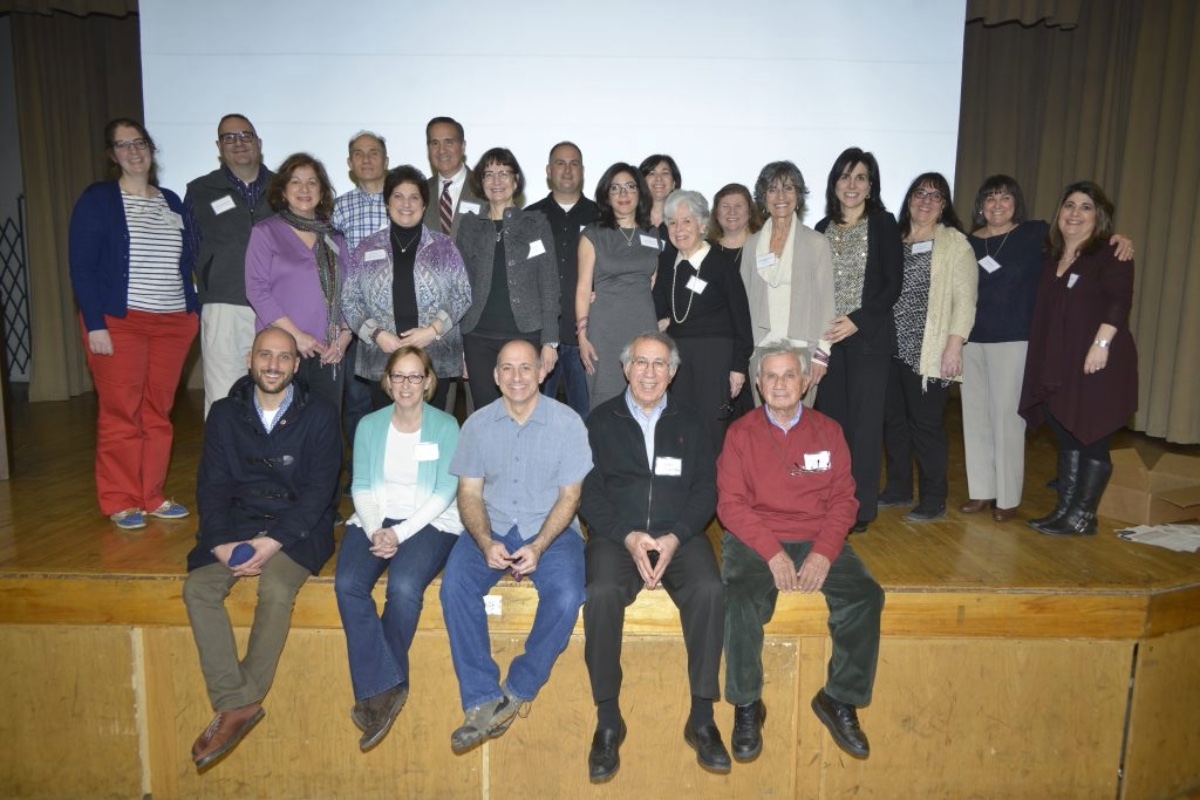
That first gathering introduced participants to American genealogical sources, immigration records, DNA testing, compatriotic union records and other resources that could help reconstruct Armenian families.
But Watertown proved to be only the beginning.
The conference traveled to the University of Michigan-Dearborn in Detroit in 2017, followed by Ramapo College in Mahwah, New Jersey, in June 2018 and Milwaukee, Wisconsin, in November 2018. In November 2019, the conference reached the West Coast with a gathering at the Mesrobian School in Pico Rivera, California. After the interruption of the COVID-19 pandemic, the conference achieved another milestone in September 2022 when it was held for the first time in Yerevan, Armenia, at the American University of Armenia.
Now, a decade after that first Watertown gathering, the conference is coming home.
From immigration records to Ottoman photographs
The Nov. 21 program will reflect how dramatically Armenian genealogical research has expanded during the past decade.
Mark Arslan, one of the pioneers of Armenian genealogy in the United States and creator of both the Armenian DNA Project and Armenian Immigration Project, will focus on immigration and naturalization records.
Arslan began researching his own Armenian ancestry in 1971 and has since assembled an extraordinary database of primary-source information relating to Armenian immigration to North America before 1930. His work demonstrates how passenger manifests, naturalization files and other seemingly ordinary government records can reveal places of origin, relatives, migration patterns and connections that disappeared from family memory generations ago.
Greg Jundanian and Lisa Misakian will introduce participants to the Armenians of Whitinsville Project, an ambitious effort to preserve the history of one of Massachusetts’ most significant historic Armenian communities.
The project brings together photographs, documents, oral histories, recipes, recordings and family stories to reconstruct not merely individual genealogies, but the life of an entire Armenian American community. Its approach offers a model that could be duplicated in Armenian communities throughout the diaspora — transforming genealogy from a collection of names and dates into a record of how families actually lived.
One of the conference’s most unusual presentations will come from Zeynep Devrim Gürsel, associate professor of anthropology at Rutgers University and author of “Portraits of Unbelonging: Photographic Journeys Across Borders.”
Gürsel’s research uncovered an extraordinary collection of photographs in the Ottoman archives documenting Armenian emigration around the turn of the 20th century. Beginning in 1896, Armenians who received permission to leave the Ottoman Empire were required under certain circumstances to renounce their Ottoman nationality and agree never to return. Photography became part of that process.
Thousands of Armenian emigrants were photographed, leaving behind images that today represent an extraordinary genealogical and historical resource. Gürsel’s research follows these photographs beyond the Ottoman archives, connecting the faces captured more than a century ago with immigration documents, American records and, in some instances, the descendants of the people pictured.
For anyone who has ever stared at an unidentified photograph of a great-grandparent and wondered what story it might contain, Gürsel’s work illustrates the remarkable possibilities created when photographs and archival records are brought together.
Armenian genealogy in France
The conference will also expand its geographic reach through a presentation by Boghos Tchitchekdjian on Armenian genealogy in France and the work of RIGA — Relais International de Généalogie Arménienne, or the International Relay of Armenian Genealogy.
Founded in France in 2020, RIGA has sought to overcome some of the particular obstacles confronting Armenian genealogists: records scattered among different archives and countries, multiple migration routes, changing surnames and the adaptation or Frenchification of Armenian family names. Its broader goal is to identify, compile and make Armenian genealogical resources more accessible.
The presentation will be particularly valuable for families whose relatives passed through or settled in France, but it will also demonstrate the increasingly international nature of Armenian genealogical research.
DNA and the expanding universe of Armenian records
Other presentations will explore DNA testing and the growing array of resources available to Armenians researching their family histories.
For Armenian genealogists, DNA can be especially powerful. The Armenian Genocide, forced conversion, deportation, orphaning, adoption and migration frequently severed the documentary trail between generations. DNA testing can sometimes bridge those gaps, identify previously unknown relatives and provide evidence supporting relationships that cannot be established through surviving documents alone.
The conference will examine how genealogists can use DNA effectively while also exploring archival and online resources that have become increasingly available.
The changes since the first conference in 2016 have been remarkable. Records once accessible only by traveling to an archive may now be digitized. Databases can connect names appearing in immigration manifests, census documents, church registers and naturalization petitions. Online collections can reconstruct the life of an Armenian village or diaspora community. Photographs once hidden in government archives can identify emigrating families. DNA matches can connect descendants living on different continents.
Yet technology alone cannot reconstruct a family.
Successful genealogy still begins with people — with grandparents’ stories, the inscription on the back of a photograph, an unfamiliar village name written on a naturalization form, the maiden name that everyone almost forgot, or the distant cousin who remembers one detail that unlocks everything else.
That is why gathering genealogists together remains so important.
More than a conference
The Nov. 21 gathering is intended not simply as a day of lectures, but as an opportunity for participants to meet others engaged in the same search.
Some of the most valuable discoveries at earlier conferences have come through conversations between presentations: discovering that another attendee’s family came from the same village, meeting someone researching the same surname, learning about an archive one did not know existed, or finding someone who can read a document that has sat untranslated in a family collection for decades.
That opportunity will continue after the formal program with a dinner featuring Armenian music, giving participants, speakers and researchers additional time to meet, exchange information and build connections.
The cost has deliberately been kept accessible:
Conference, including lunch: $25
Dinner with Armenian music: $40
Conference, lunch and dinner: $65
For an entire day devoted to uncovering generations of family history, it may prove to be a remarkably valuable investment.
Ten years after Armenian genealogy enthusiasts first filled the ACEC in Watertown, they will return with tools and resources that could scarcely have been imagined at that first gathering.
But the fundamental question remains unchanged.
Who were the people who came before us?
For Armenians, answering that question is about more than constructing a family tree. It is an act of recovery. It reconnects families fractured by genocide and migration, restores names to people who might otherwise be forgotten and preserves stories for generations who have yet to hear them.
On Nov. 21, hundreds of those individual searches will once again come together in Watertown.
Bring your questions. Bring your family names. Bring the village name no one quite knows how to spell. Bring the photograph whose faces you cannot identify.
You may leave knowing more about where — and who — you came from.
The 10th Anniversary Armenian Genealogy Conference
Nov. 21, 2026
Armenian Cultural and Educational Center
47 Nichols Ave., Watertown, Massachusetts
Conference and lunch: $25 | Dinner: $40 | Both: $65
For conference information and registration, visit ArmenianGenealogyConference.com.

What time does the event start?
I want to attend and I am coming from Logan Airport neighborhood so need to make arrangements for travel.
A bit about my research and questions:
I made a potential breakthrough with eastern Mediterranean Armenian enclaves on one of the Greek Islands ..Syros. My birthmother must have heard it wrong and thought Skorpios but the Onassis family owned that island and before that not a populated island. Syros was in shipping routes to Greece. I came to find out Armenians came there to escape persecution possibly during the Hamidian massacres which kind of sync with my family’s narrative of missionaries helping with humanitarian efforts to bring Armenians to the US. What makes my story kind of unique is mine doesn’t fit the Watertown, NYC, New Milford, NJ, or California Armenians. My ancestors ended up in Georgia, as in Macon County, Georgia. Peaches and Pecans Georgia. I am hoping to find out if there are any others who might have a similar family history.
Will there be anyone whose focus is on the lesser known immigration patterns?
Regarding the research and projects:
I am excited to find out my alma mater, Ramapo College was involved in this. Ramapo has been making a name for itself in Genetics and Forensics and I now regret majoring in international politics because I am finding piecing together the past very interesting.
Thank you George! To you, Mark Arslan and the other contributors and organizers for your passion and commitment to keeping our acts of recovery and ‘roots’ movement going. These conferences, the day’s program, and connections made have been extraordinary. A true disappointment that I’m unable to attend this one!