



Finding my Voice
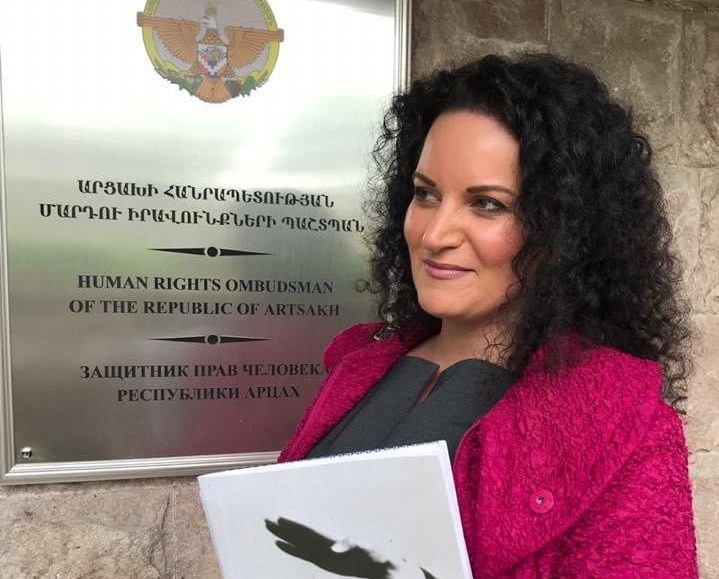
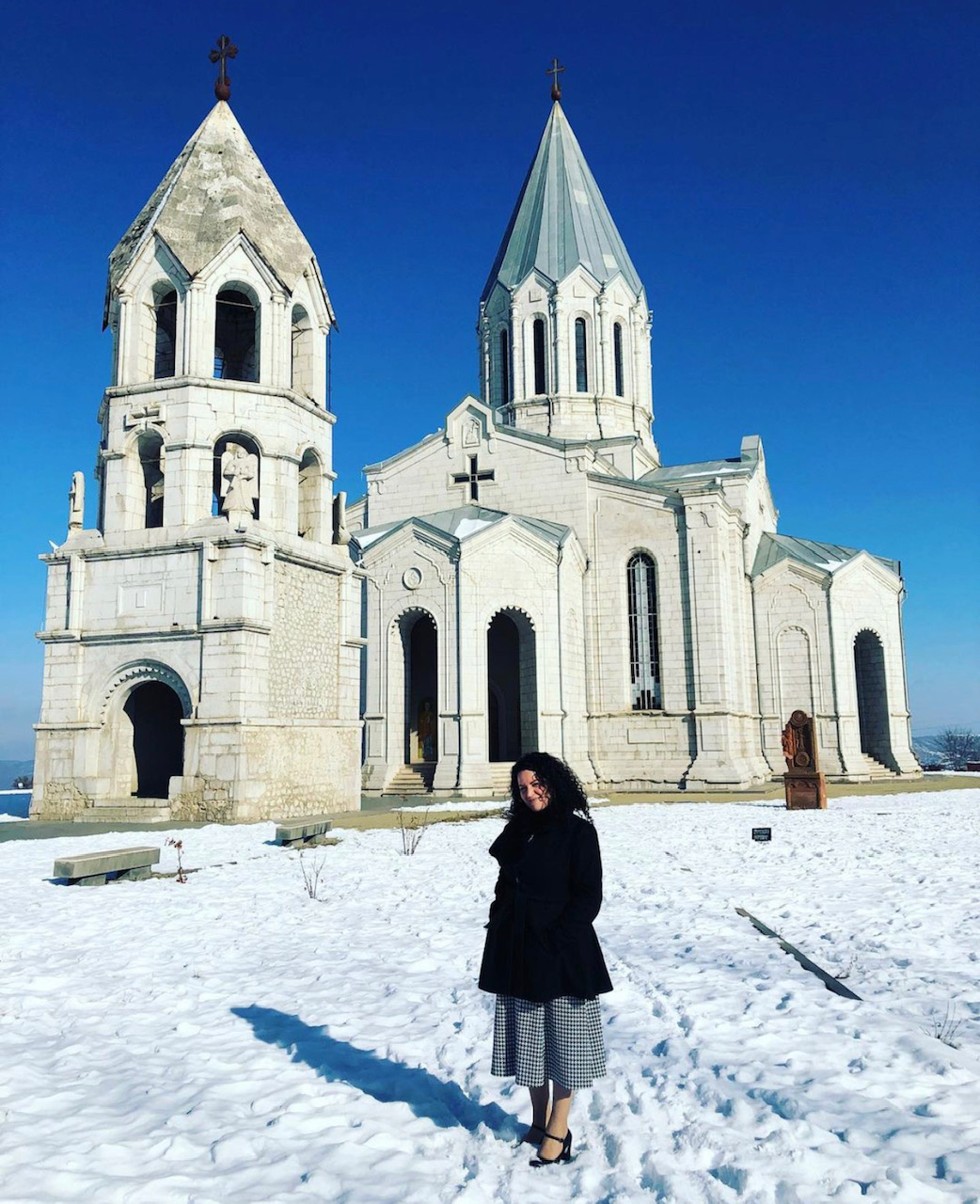
I was asked to write because my voice is clear. I was told it resonates with the way many people feel, but can’t verbalize. Yet now my clarity can’t be further from reality. For the first time in decades, my voice is a stranger to me. I had to look for my voice after trying to forget the past for two decades, first finding it with the publication of my book almost a decade ago. I found it then, but it is silent now because it is too painful to talk. Writing has been therapeutic since I was a little girl, but since the end of the Artsakh War, aside from occasional posts on social media, I haven’t been able to bring myself to speak or write about any of it. Perhaps because writing it down will make it more real, more defined and if I start crying, I won’t be able to continue my work. Perhaps because so many in the community rely on me for emotional support, inspiration or hope. Perhaps because there was so much work to do that writing an article about what everyone already knows would be criminal. So many people dead; so many people in need. So much devastation and it doesn’t seem to end. But time has passed and here I am sitting down with my laptop 11 months since I last visited Shushi in January and felt a strange and urgent need to run over and take a photo by Ghazanchetsots Cathedral despite the heavy snow.

Thank you Anna!
Dear Anna,
I read your article and I greatly admire your brave analysis of the innner Armenian problems and the problems of Azerbeidjan.
Yestereday before i read your article I wrote a letter to the editor of a big Dutch Newspaper that published an article by a Journalist who went back to Agdam wih an Azeri refugee family.
Well I can’t send you the Dutch article but you can guess what it is like.
Underneath you find my letter translated into English and you will see your fate is not forgotten.
Further conversation I would welcome but on a private basis.
Yours Sincerely,
Meis Saltet, The Netherlands
By the way this letter has not been published (yet) and I have very little hope the newspaper will accept it.
Letter to the editor of DE Volkskrant 30-12-2020
Nagorno Karabach
Undoubtfully the suffering of expelled refugees is enormous and the sight of ruins in wich you have to lacate your home touching.
But is the larger picture that J. Van der Ploeg gives us about Nagorno Karabach right?
Did he check the Azeri interpretation of the truth?
The amount of Azeri refugees mentioned in the article is highly disputable.
The almost 400.000 Armenian refugees from Azerbeidjan during the last war are not mentioned.
Fact is that during the time the Sovjetunion began to fall apart the Armenians asked for the right of selfdetermination in this old Armenian region.
This desire was struck down with violence by the Azeris. First with massacres in Sumgait, Kirovabad and Baku after which the Azeris started a terrible war.
This area is not only a strategic area on the Silk Road it is also a historical Armenian area of which the Turks are systematically expelling the Armenian population.
Costructive solutions from the side of dictator Aliyes are not to be expected.
Falsification of history and the continuation of genocidal politics is what awaits the Armenians.
With great interest & appreciation I read your article, Anna, & I am proud of your articulate descriptions of your experiences, as well as your disappointments with the behavior of the authorities at large in the Homeland. I need to mention here that, as your followers, we do feel your frustrations as well. We are thankful you decided to write it all & we thank God for your leadership.
Dear Ana,
Allow me some more words Ana.
By rereading your atricle and my reaction first I have to say that I see two major spelling mistake:lacate must be locate and: Aliyes must of course be Aliyev.
Maybe I made more mistakes. English is not my mother tongue.
Rereading your article where you speak of fragmentation and being fractured I suddenly had to think of Ara Baliozian’s book “Fragmented Dreams”.
An eyeopener and a guide for me in the nineteen nineties, when I was a newcomer in the Armenian universe.
Ana inspite of everything I, like you, have hope for the future and I have confidence in the Armenians and I especially have confidence in the Armenian women, young and old.
They are the real roses of the community.
So do keep up your good work, that is the only way.
Meis Saltet, the Netherlands, Europe
The Armenian people deserve better than the “leadership” they have at home and in the diaspora. Armenian politics remains fixed in narrow minded self-interest. We hope the younger generation can free itself from the past and create a new vision. The answers lie within projects like TUMO that bring creative minds together. Armenia’s failure and the diaspora’s failure to welcome Baku Armenians squandered enormous potential and know-how.
No, they get exactly the government they deserve. Everyone does.
Maybe the adults do. The youth do not. Such an attitude is too nihilistic.
As I read your article Anna I went through so many emotions. Anger, frustration and sadness most of all. These past couple of months have been very painful but like you I live with hope that our leaders will come to their senses, unite and start thinking and planning long term. Thank you Anna, I look forward to reading your articles.
Dear Anna,
I am deeply touched by your story. You are a magnificant Human Being.
Thank you for sharing your personal lifetime story with us.
Thank you. As an Armenian from Ankara no longer living Turkey I recognize all methods of panturkish ideology you have described strikingly correct. Still I have hopes that we will survive the fascism in the region. We can stop Armenian lives to feed the blood producing “neutrality industry” of the watching world with more knowledge and solidarity.
Dear Joe and others who are interested,
The best article I have read the last months on the “neutrality industry” mentioned in your reaction (and how to argue against it) ,is by Leo Ensel. It is in German but with a translation program on your computer, it should be possible to read it.
See the link below: the title is: ‘Why neutrality is taking sides”
The second link is also an article by Ensel on the war.
Meis Saltet, the Netherlands
https://www.heise.de/tp/features/Der-Krieg-um-Berg-Karabach-oder-Warum-Neutralitaet-Parteinahme-ist-4931324.html
https://www.berliner-zeitung.de/politik-gesellschaft/hintergrund-zum-krieg-um-berg-karabach-li.116728?pid=true