


FeaturedFamily Histories
An original parchment
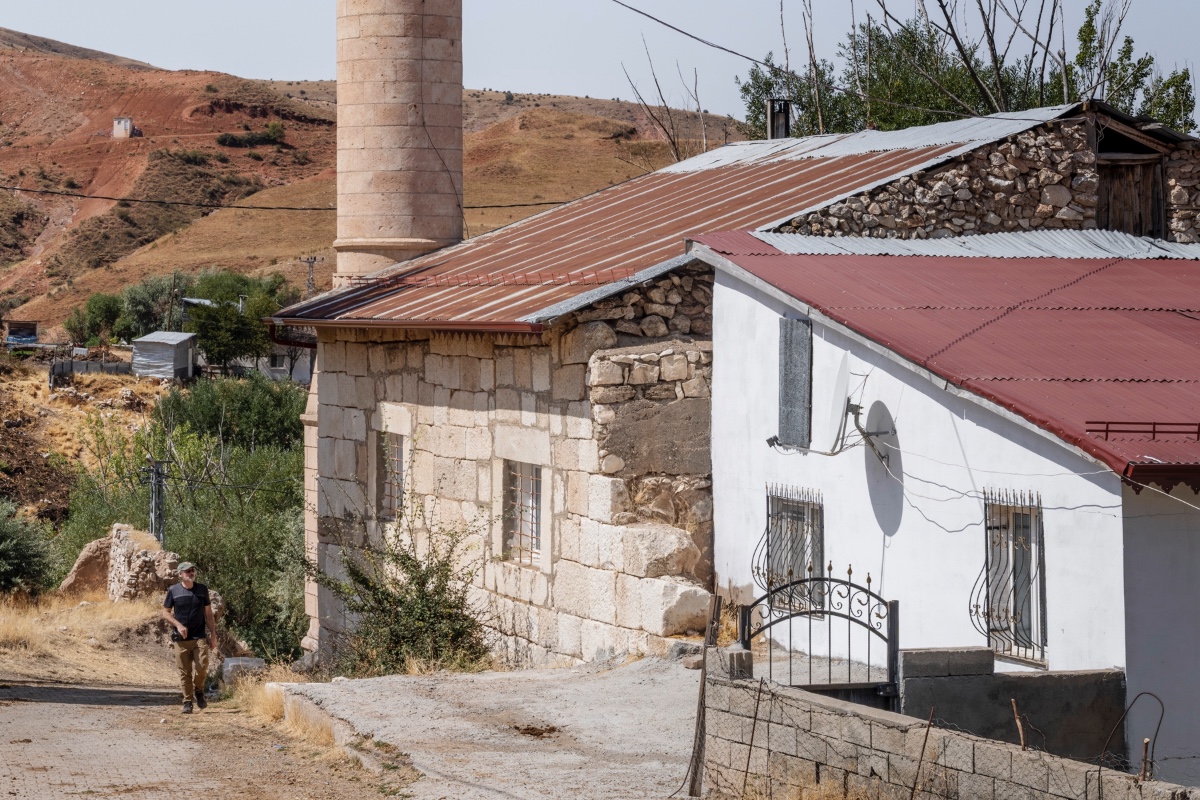
The building carried the heavy feel of alternate reality. The roof and windows were wrong. The minaret, too. We had felt this before. Many villages had the quality and sense of standing inside a palimpsest, scraped and written over, where even the landscape, after 100 years, had been altered. And yet, as before, smaller, muted traces refused erasure. First to speak was the traditional nave-shaped water fountain, long dried and filled with rubble. Then the stones spoke — large, pale and honed with the meticulous edge of a craftsman’s tools. They belonged to another era. We were in Ghavraz. Until the start of the 20th century, it was an Armenian village and the home of Ted’s great-grandfather, Zadig Matigian.

Tragic, heartfelt and poignant.
Those stone contain the ghosts of the past.
The khachkar used as a “brickstone” on the wall of the cannibalized Armenian church, now used as a mosque, could not more symbolically reflect the horrific outcome of the Armenian Genocide in Western Armenia. Even Armenian artifacts like these are very hard to find across Western Armenia, which are usually barely recognizable ruins, or are cannibalized as “building materials” in buildings, or are outright destroyed. Visiting Western Armenia is like visiting a giant Armenian graveyard, except that not even a single intact Armenian cemetery remains. So deliberate, thorough and systematic was also the destruction of Armenian cultural heritage during the Armenian Genocide.