




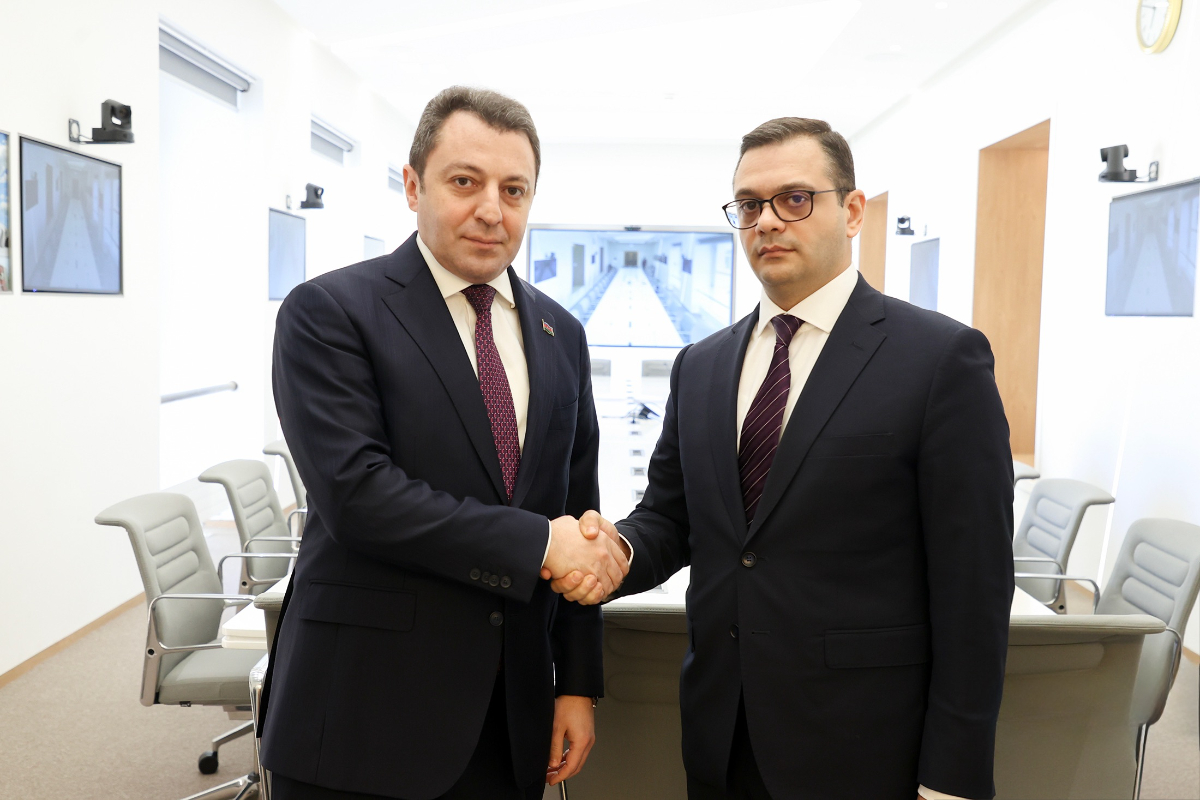
YEREVAN — Azerbaijan added another complication Wednesday to its unfinished peace process with Armenia when Foreign Minister Jeyhun Bayramov publicly linked its completion to the adoption of a new Armenian constitution.
Bayramov told reporters that Baku’s position remained unchanged and said Azerbaijan was closely following Armenia’s constitutional process. He asserted that the joint declaration adopted in Washington states that Armenia must adopt a new Constitution before the normalization process can be completed.
The published declaration contains no such provision.
The official text signed in Washington records the initialing of the peace agreement, the parties’ commitment to normalization, regional connectivity, and respect for sovereignty and internationally recognized borders.
Six days earlier, Prime Minister Nikol Pashinyan had said precisely that Armenia’s Constitution was not part of the bilateral agenda. “We discussed all the issues on our agenda with the president of Azerbaijan, but the constitution is not on our agenda,” Pashinyan told reporters Sept. 3. He described the constitution as “an internal issue of the Republic of Armenia.”

Armenia is independently preparing a new constitution, and Pashinyan has said the draft will remove the existing reference to the 1990 Declaration of Independence. His government presents that process as an internal decision connected to its broader effort to leave the Karabakh conflict behind.
Taken together, those developments underscore how far the current process remains from anything that can credibly be described as a settled peace.
A peace treaty that still comes with conditions
The Armenia-Azerbaijan peace agreement was initialed in Washington in August 2025, but it has not entered into force.
Its published text already addresses the central legal question Baku says concerns it. Armenia and Azerbaijan recognize the former Soviet republican boundaries as their international borders, affirm that neither has territorial claims against the other, and undertake not to use force or threaten force against one another’s territorial integrity.
Baku’s position remained unchanged and said Azerbaijan was closely following Armenia’s constitutional process.
Article IV goes further, requiring both sides to refrain from intervening in each other’s internal affairs. Article XII states that neither party may invoke domestic legislation as justification for failing to perform the agreement.
Against that language, the continuing constitutional demand raises an obvious question: If Armenia has formally agreed that it has no territorial claim against Azerbaijan and the treaty itself obliges both countries to respect each other’s sovereignty, why must Armenia’s constitution still be altered before peace can be concluded?
Bayramov’s Sept. 9 statement makes clear that Baku continues to regard Armenian constitutional change as part of the unfinished business of normalization.
A military position 3 kilometers inside Armenia
On Sept. 5, military journalist Davit Galstyan published satellite imagery that shows Azerbaijan expanding and reinforcing a military position in Armenia’s Syunik province established during the Azerbaijani advances of 2021.
According to Galstyan’s analysis, the position extends approximately 3 kilometers into territory identified as Armenian using Google Maps and a 1974 Soviet General Staff map. Satellite images from May and July 2025 show sections of the position being newly equipped or expanded, while later imagery suggested work may have continued. The construction itself did not take place this week; the detailed public documentation of its extent did.
The location makes the report particularly sensitive. Galstyan notes that it sits in one of Armenia’s narrowest territorial corridors, with only about 26 kilometers separating that area from Armenia’s border with Nakhichevan. He has previously reported similar reinforcement at another Azerbaijani position farther southeast.
The initialed peace agreement itself states that the former Soviet boundaries became the international borders of the independent states and must be respected as such. It also commits the parties to continue border delimitation through their respective commissions.
Why is an Azerbaijani military position located kilometers inside territory identified as Armenian being strengthened while peace is simultaneously described as established?
The prisoners peace has not brought home
Human rights lawyer Siranush Sahakyan, who represents Armenian detainees before the European Court of Human Rights, said at a Sept. 4 press conference that the prisoners face severe restrictions on independent legal, humanitarian and family contact. She has also raised allegations of physical abuse and religiously motivated mistreatment.
Sahakyan argued that religion cannot be separated from the treatment of Armenian prisoners or from the wider postwar environment. She linked their experience in detention to the destruction of Armenian Christian cultural heritage in Nagorno-Karabakh and said the prisoners’ Christian identity increased their vulnerability.
“We have seen targeted actions involving religious symbols,” Sahakyan said. In cases involving tattoos of crosses, she said, “they were burned, with the cross removed from the skin through torture.” According to Sahakyan, Armenian prisoners were allowed some limited reading material while access to the Bible was prohibited, and there were cases in which detainees were “forced to read the Quran.” Sahakyan said those reported practices led her to conclude that “being a Christian makes a person more vulnerable” in Azerbaijani detention.
The allegations are serious. Azerbaijan categorically rejects them.
On Sept. 5, Azerbaijani Ombudsperson Sabina Aliyeva described claims of torture, religious discrimination, destruction of Christian symbols, denial of access to the Bible and forced Quran reading as “unfounded and biased.” Her office characterized the accusations as an effort to damage the ongoing peace process and said serious allegations should not be presented without credible evidence.
If Sahakyan’s allegations are false, unrestricted and credible humanitarian monitoring could help establish that. If they are accurate, the inability of independent organizations to regularly access detainees becomes considerably more alarming.
The International Committee of the Red Cross said this week that there is currently no agreement allowing it to resume visits to Armenians held in Azerbaijan. Zara Amatuni of the ICRC’s Armenian delegation said the organization remains ready to act as a neutral intermediary, but had not received the necessary confirmation for a renewed visit.
A voice from inside the prison
The Azerbaijani government’s account faced an even more direct challenge on Wednesday when Davit Ishkhanyan, former speaker of the National Assembly of Artsakh, delivered a recorded message from Azerbaijani imprisonment.
Ishkhanyan specifically addressed Aliyeva’s claim that she conducts confidential meetings with Armenian detainees and that their rights are protected. He confirmed that she had met them three times during roughly three years of detention, most recently on May 5.
His description of those meetings was different from Baku’s.
Ishkhanyan said the prisoners had used their meetings with the ombudsperson to raise violations of their rights and international legal norms, asking for her intervention. He emphasized that their central complaints were not about coffee, food or ordinary prison conditions, but about legal rights, access to documents and the ability to defend themselves.
Ishkhanyan said that in May he asked Aliyeva to help provide his family with the Azerbaijani-language version of the Feb. 5 judgment issued by the Baku Military Court. More than four months later, he said, neither his family nor his lawyers had received the full document.
An Azerbaijani military position located kilometers inside territory identified as Armenian being strengthened while peace is simultaneously described as established.
He also said defense attorneys were not being provided with indictments or judgments and that prisoners were obstructed from sending legal material in their possession to representatives outside Azerbaijan.
He raised another potentially consequential issue. Ishkhanyan said that since August 2025, he and other detainees had been unable to issue powers of attorney to representatives in Armenia who could act on their behalf inside Armenia or internationally. He attributed that inability to obstacles created by Azerbaijani state institutions.
He also said the detainees had not received the Aug. 6 appellate judgment following a hearing he described as lasting only 14 minutes.
Ishkhanyan said he had appealed to Armenia’s human rights defender in May seeking assistance and described the result as “zero.” He publicly invited the Armenian ombudsman to visit the Umbaki penitentiary and meet the prisoners directly.
He also called on Armenian state bodies to obtain the indictments, judgments and related documents themselves and determine whether the Azerbaijani proceedings contain allegations extending beyond the individual defendants to Armenian statehood and the Armenian people.
The significance of Ishkhanyan’s recording lies in its timing. Azerbaijan’s ombudsman has just publicly assured the outside world that detainees’ rights are respected. One of the prisoners she says she has personally interviewed has now described unresolved legal complaints that he says were raised with her months ago.
That discrepancy warrants independent examination.
The prisoners occupy an unusual place in the architecture of normalization for another reason: their release is not guaranteed by the initialed peace agreement.
The woman asking to go to Baku
That uncertainty has pushed families toward their own humanitarian initiatives.
Veronika Zonabend, wife of imprisoned former Artsakh State Minister Ruben Vardanyan, has been seeking to organize an international women’s humanitarian delegation to Azerbaijan to visit Armenian detainees.
On Sept. 8, Zonabend appealed to Armenian Security Council Secretary Alen Simonyan after reports of a possible visit to Baku. She asked whether he would meet detainees, speak with their families beforehand and carry letters from relatives.
Azerbaijani media outlets have simultaneously raised a remarkable possibility concerning Zonabend herself.
On Aug. 31, the Azerbaijani outlet Unikal examined whether she could face prosecution if she entered Azerbaijan because of a 2022 visit to Nagorno-Karabakh. The report discussed provisions under which an alleged illegal border crossing could potentially expose her to a prison sentence of up to five years.
The report did not establish that Azerbaijani authorities have issued an arrest warrant or formally charged Zonabend.
A woman attempting to organize a humanitarian visit to her imprisoned husband and other Armenian detainees is confronted with Azerbaijani media discussion of whether entering the country could expose her to imprisonment.
The dead are disappearing too
Caucasus Heritage Watch reported on Sept. 5 that satellite imagery documented the destruction of the Old Armenian-Russian Cemetery in Shushi between May 9 and May 14, 2026.
The site contained at least 40 burial markers, including five medieval Armenian khachkars dating from the 12th and 13th centuries and 35 19th-century gravestones. Satellite images showed the cemetery being leveled during construction associated with a wastewater and stormwater treatment facility.
The cemetery preserved evidence of Armenian residents, Russian military personnel and other people who shaped the city’s 19th-century history.
A peace unfolding alongside the destruction of one community’s physical record presents a much more difficult proposition.
191 people still missing
Another figure released this week illustrates how incomplete the human aftermath remains.
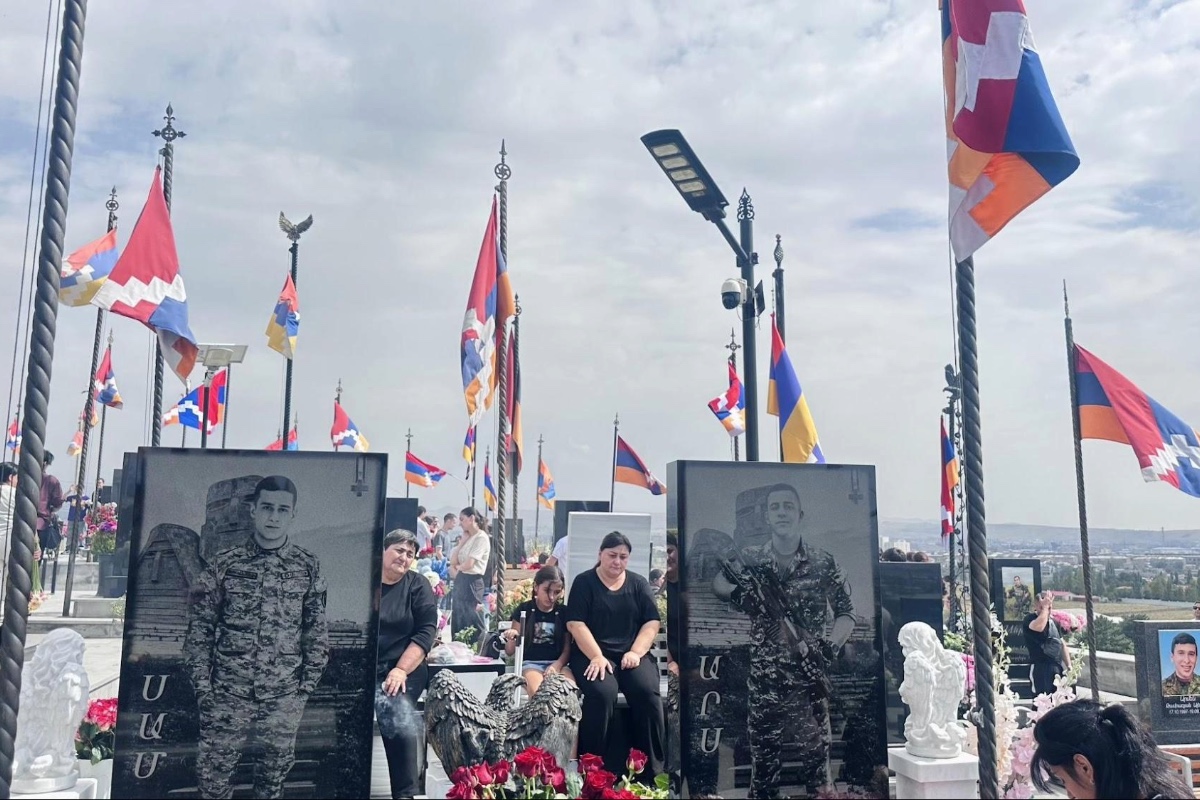
Armenia’s Investigative Committee said Sept. 8 that 191 people remain missing from the 2020 war — 172 service members and 19 civilians. It put the death toll from the 44-day war at 3,833, including 3,755 service members and 78 civilians.
For governments, six years can constitute a new diplomatic era. For families who still do not know whether a son, father or relative is alive, dead or buried somewhere unidentified, the war does not end according to the diplomatic calendar.
Normalization is moving faster than resolution
The Armenian government has promoted regional connectivity and economic interdependence as mechanisms for reducing the likelihood of another war. New transit infrastructure is being developed as part of a broader vision in which commerce and open routes replace military confrontation. Greater connectivity could reduce Armenia’s isolation, expand markets and weaken dependencies that have constrained its foreign policy for decades.
Azerbaijan’s foreign minister says constitutional change in Armenia is still necessary. Satellite analysis indicates that an Azerbaijani military position extending approximately 3 kilometers into territory identified as Armenian has been reinforced. Armenian prisoners remain without renewed ICRC access. Their lawyer alleges religiously targeted torture, including the burning of cross tattoos, denial of Bibles and forced Quran reading.
One prisoner now says he and his lawyers cannot obtain basic judicial documents. A prisoner’s wife seeking humanitarian access has been confronted by Azerbaijani media discussion of whether she could herself face imprisonment. Nearly 200 Armenians remain missing from the 2020 war. Medieval khachkars and 19th-century Armenian graves have been erased from Shushi.
Those are not peripheral details surrounding an otherwise completed peace. They are among the conditions by which the existence of peace should be measured.


Of course, “normalisation” is proceeding faster – it is entirely on the terms set by the Turks!
We are cursed by being ruled by dhimmis like Pashinyan who will bend over backwards to please the Turks.
Pashinyan is a real-life example of “Uncle Tom”, the black house slave who is excessively subservient and servile to his white master, and who tries in vain to please him. Pashinyan is humiliating Armenia by groveling before the Turks and Azeris, in his foolish and futile belief that they will be somehow lenient and go easy on Armenia. No chance of that!
Thanks to Pashinyan’s total inexperience in diplomacy and foreign affairs, political short-sightedness, recklessness and incompetence, Armenia is now on its knees and he is seeking “magnanimity” from these two Turkic predators who have decimated Armenia and now have Armenia on a leash.
This is the most shameful chapter in Armenian history.
Sadly it seems that some just can’t comprehend that as Armenia lost, thus as the loser has to bear the consequences of defeat.
As for why Armenia would lose where it had succeeded 26 years before is linked to the relative decline in military ability since 1994 , poor leadership and lack of support from foreign powers over the issue.
Simply put Armenia is in a weak position and it’s position in the years prior to the 2020 conflict even when Pashinyan took office in 2018 , was in retrospect borrowed time and not reflective of its current strength at the time, thus a case of riding on the glory and resting on laurels.
This malaise is of course not unique to Armenia, Europe is discovering this in regard to it’s self proclaimed peace continent mantra from WW2, Taiwan in 1971 would lose it’s UN seat as representative of all China as it didn’t reflect actual realities .
I regard peace as absence of war in a normalized formal state relations but not necessarily absence of simmering issues to resolve. I have Greece and Turkey in mind.
I regard amending the constitution an internal Armenian matter. The citizens of Armenia may opt not to remove the 1990 Hrchagakir (DOI) from the Constitution, the PM Nikol Pashinyan is advocating, and live with the consequences of their collective decision.
We did not lose the Artsakh war, Artsakh was essentially left on its own to defend itself, still held its own despite being outnumbered and outgunned, and finally given away by Pashoglu for a few billion dollars.
@ Vartan, that number you mentioned, did you pull it out of a hat?
@reader
Artsakh was betrayed and thrown under the bus by Pashinyan. Period. The loss of Artsakh was not inevitable and it was absolutely avoidable. So shut up.
Arktash was doomed by the lack of definitive support from Armenia who never recognised it as a nation nor incorporated it into Armenia legally even if between 1994 and 2020 there was no border, and from foreign powers, the betrayal by Russia in it’s own failed ingratiations with Azerbaijan also condemned it to demise. As for Armenia not losing claims this is sophistry, Arktash was backed by Armenia and dependant on its support and the defeat was borne by Armenia in 2020 as it signed the ceasefire compelling withdrawal not Arktash. Similarly claims of we didn’t lose to Azerbaijan because they had foreign support are escapist denialism from reality, it’s as daft as Russians being we would have beaten Ukraine if NATO hadn’t supported it and we were able to target them for doing so.
Charles: Artsakh was doomed when Pashoglu insulted Putin and Russia and distanced Armenia from Russia at the behest of his western handlers. This is well known. The Arstakh defense forces were left mostly on their own in the 2020 war. This is also well known. Pashoglu then gave away most of Artsakh proper when it was still being defended by tbe Artsakh defense forces. Your comment is false, full of anti Russian hysteria and propaganda, and typical of pro pashoglu commenters who foolishly believe NATO and europe will come to Armenias defense as they did in 1915! Oh wait! They didnt! It was Russia that saved what was left of Armenia. Like it or not.
When he took office in 2018, no UN recognised nation including Armenia recognised Arktash as independent and except Armenia all countries considered it part of Azerbaijan. Pashinyan was able to take office due to disaffection over the schlerotic pro Russian governments and Russia own extensive weapons sales to Azerbaijan which led to doubts about what kind of ally Russia actually was. Whilst Armenia didn’t commit to Arktash in 2020 in part because expending it’s arsenal on Arktash would have left the rest of Armenia in jeopardy. It was also clear that Azerbaijan clearly had the advantage in this encounter. It is clearly hard to accept that Russia has always considered since 1922 the area to be part of Azerbaijan and has sought to keep the animosities festering so as claim to be helping in something of which it stirred up in a divide and rule ploy although by 1988 this too clever by half action led to the communal violence which strained the Soviet claims to be a harmonious entity of peoples united in class struggle in a socialist utopia with a communist government. I haven’t claimed Europe and NATO would save Armenia, but what is clear to those of sound judgement is that Russia has been abusive and cynical, as for 1915 it was the Russians who primarily gave succour to Armenian dreams of freedom from the ottomans but weren’t due to their engagement in WW1 in part able to actually provide relief and a case of setting up and using a political football. As for Russia like the Soviets a century before has cynically in the confidence of the deep animosity and providing it doesn’t have blood on its own hands traded Armenian interests as collateral in it’s in both cases short term success in ingratiations with Turkic nations, Kemalist Turkey distanced from the Bolsheviks after gaining western Armenia and the kars plateau and Azerbaijan after gaining Arktash similarly distanced from Putin’s Russia whether the Kremlin has learnt any lesson from this repeated similar experience remains to be seen or perhaps will make the same mistake in 100 years time.
When he took office in 2018, no UN recognised nation including Armenia recognised Arktash as independent and except Armenia all countries considered it part of Azerbaijan. Pashinyan was able to take office due to disaffection over the schlerotic pro Russian governments and Russia own extensive weapons sales to Azerbaijan which led to doubts about what kind of ally Russia actually was. Whilst Armenia didn’t commit to Arktash in 2020 in part because expending it’s arsenal on Arktash would have left the rest of Armenia in jeopardy. It was also clear that Azerbaijan clearly had the advantage in this encounter. It is clearly hard to accept that Russia has always considered since 1922 the area to be part of Azerbaijan and has sought to keep the animosities festering so as claim to be helping in something of which it stirred up in a divide and rule ploy although by 1988 this too clever by half action led to the communal violence which strained the Soviet claims to be a harmonious entity of peoples united in class struggle in a socialist utopia with a communist government. I haven’t claimed Europe and NATO would save Armenia, but what is clear to those of sound judgement is that Russia has been abusive and cynical, as for 1915 it was the Russians who primarily gave succour to Armenian dreams of freedom from the ottomans but weren’t due to their engagement in WW1 in part able to actually provide relief and a case of setting up and using a political football. As for Russia like the Soviets a century before has cynically in the confidence of the deep animosity and providing it doesn’t have blood on its own hands traded Armenian interests as collateral in it’s in both cases short term success in ingratiations with Turkic nations, Kemalist Turkey distanced from the Bolsheviks after gaining western Armenia and the kars plateau and Azerbaijan after gaining Arktash similarly distanced from Putin’s Russia whether the Kremlin has learnt any lesson from this repeated similar experience remains to be seen or perhaps will make the same mistake in 100 years time.
Charles, More lies and anti Russian hysteria coming from you. Russia sold weapons to BOTH Armenia and the Azeris. The Armenians did not have as much money to purchase weapons so their purchases were subsidized. This kept a balance. However the Azeris bought their most advanced weapons from Israelis and training from the turks so stop with the anti Russian propaganda. As for your 1915 summary, that is an anti Russian version as well. The Russian soviets stopped the kemalist turkish advance into Armenia. If it wasnt for their presence the turks wouldve finished their invasion and wiped Armenia off the map. Now lets talk about our dear beloved humanitarian french who betrayed the cilician Armenians and ceded all of Cilicia to the Turks. Armenia is presently commiting suicide by distancing itself from Russia and Iran and trying to appease the unrepentant turks. Unfortunately too many buy anti Russian propaganda such as your disingenuous posts. The result will be the complete appeasement of the turks over the genocide, the forgetting of the sacrifice our ancestors made, and the loss of syunik.
Hear! Hear!
You are a Patriot, Vartan!
Absolutely true, spot on!
The US and the west upset the balance of Armenia and the Azeris. Pashoglu, as their puppet was the vehicle and traitor used to disrupt that balance, to give away Artsakh, cause the death of thousands of young Artsakh Armenians (many who are stilled tortured in azeri jails as Pashoglu does nothing to obtain their release. This of course was another maidan to put more pressure on the Russians from the south. And Armenia will end up like Ukraine, destroyed and partitioned. Hayastancis are being used and few of them realize it.
100%
Russia sold weapons to Azerbaijan knowing full well they would be used against its ally Armenia. Armenia as a member of the CTSO had mates rates for its purchases of weapons from Russia who in turn could claim Armenia was sponging by not paying official prices. Armenia as a CTSO member was restricted in what weapons it could buy from NATO countries such as France and Greece, Azerbaijan by contrast had no such incumberence in addition to its greater overall wealth from its hydrocarbons. Hence was able to outclass Armenia clearly in 2020 . As for the Soviets stopping the Kemalist advance in 1922 seven years after the Ottoman empire whilst at war with the Russian empire launched it’s genocidal push on the Armenian population, on the basis of tretchery accusations, this was a classic school playground trick of push and grab calling out “saved you” as the Soviet Union had been arming and financing the Kemalists who in cahoots with the Soviet Union overan Kars. Yes there was a let down by France although it should be borne in context to the wholesale botch by the allies, France, UK, Italy, Greece regarding their occupation of parts of Turkey after WW1 which also led to the demise of the Greek population of western Turkey and the failure to afford a nation for the Kurdish people at the same time. As for the first Armenian republic being reduced to a rump state of the Armenian SSR for being disloyal to Moscow, Georgia and Azerbaijan had also broken away from the Russian empire with the loss of control with the Bolshevik revolution yet they weren’t punished with mass loss of land to Turkey as part of a failed appeasement and ingratiation hoping to elicit Kemalist Turkey into it’s international socialist revolution seeking a communist world order.
Apologies about the previous post being duplicated there was a problem with sending the original post resulting in a double post.
Again, you are wrong. Russia maintained a ceasefire for years between the two countries and continuously organized talks. Armenia had every opportunity to buy advanced weapons such as drones from Iran for instance but failed to do so. That includes your hero pashoglu and his cast of hand picked clown generals. This status quo was undermined and broken by the west and their puppet pashoglu. Of course the west will paint Russia as the enemy, their plan is to pull eastern bloc and former soviet republics away from Russias orbit. They will sacrifice these countries to bring down Russia. As for the events of 1915-1921, the fact remains that the soviets prevented the Turks from taking eastern Armenia and subsequently created Soviet Armenia, which was one the most educated and technologically advanced soviet republics. Those who think the west will save or prevent turkey from taking Armenia are foolish. And the turks will do it to complete their pan turkic dream. The only country able to prevent this is still Russia. They only have an interest in preventing this from happening. Alternately, The west could care less if Armenia disappears. their only aim is to destabilize Russia. The only natural allies in that region remains Russia and Iran. That is the reality. It takes skillful leadership to lead a small country in a region like this, unfortunately, the Armenians in Armenia have been led by corruptible leaders or our latest “leader”; an outright traitorous western sponsored puppet. The most dangerous kind.
The choices for Armenias alliances are Russia and Iran or the turks and Azeris. That is it. It is ridiculous and amazing that this is even being seriously debated among seemingly intelligent Armenians.
Absolutely. Making a deal with the Turks and Azeris is like a Faustian bargain, with Pashinyan as Doctor Faust and the Turks and Azeris as Lucifer/Satan, which never ends well for the bargainer, in this case not Pashinyan, but Armenia. Any agreement made with these two Turkic predators amounts to drinking from a poisoned chalice, with the outcome a Pandora’s box for Armenia.
Pashinyan only took office in 2018 the previous apparently patriotic governments had common to many victors been riding on the glory and resting on their laurels over 1994 and an all too common feature of a victor is a complacency and reticence about new ideas for warfare the defeated is for obvious reasons aware of their failings and more open to new ideas. As for buying drones from Iran, Iran itself despite it’s animosity with Azerbaijan was generally neglectful of its northern neighbours and focused on gulf and levant, also as Armenia was Russia’s ‘hood Iran wasn’t too interested in trying to muscle in and Armenia out of deference to Russia didn’t want to develop close military links with Iran despite an all weather relationship, also purchases of weapons from Iran would have risked US and EU sanctions remember Armenia had a faux pas when it forwarded Bulgarian weapons to Iran who forwarded them to its allies in Iraq who used them against US troops causing a strain to the relationship with the USA who wasn’t a major supplier to Azerbaijan. As for negotiations Armenia was close to agreeing a partial withdrawal around Arktash but Russia blocked Armenia stating it would jeapodize Arktash and supported the attack on the parliament in 1997 which furthered conciet and complacency in it’s posture, even later on Russia proposals when more favourable to Azerbaijan were deemed too drastic and some even claim Russia supported Pashinyan taking office as he would be seen as more willing to accede although this does seem conspiratial. The Bolsheviks and the Kemalists essentially returned to the pre 1878 border, and again because you don’t get roubles for telling the truth that the Kemalists advance was made possible by Bolsheviks support in weapons and gold and other assets because that suit the narrative. Eastern Armenia which essentially forms the current Armenia was from former Persian territory until Russia took control in 1829 so Kemalist Turkey had little claim upon the area. Russia wanted the conflict to fester so as to control Armenia by that means and also preoccupy Azerbaijan, judging Azerbaijan to be more important than taken for granted Armenia it betrayed them to curry favour but didn’t want them to be as successful as they have been since 2020 it would have rathered been able to maintain its presence in Arktash to act as saviour to Armenians who would remain grateful and dependent and not allow Azerbaijan to get all of what it wanted but it would stay be pleased with Russia for concurring with its attack in 2020 reversing what 26 years of negotiations had failed to achieve, but it’s own preoccupations in Ukraine meant there would be no Berlin airlift or Sarajevo siege relief for Arktash. It was the classic case of lighting a fire and it burning beyond ones desired extent. Remember Russia support for Armenia had strained it’s relationship with Azerbaijan and led to it looking to Turkey and Israel and developing bypass trade via Georgia and Russia wanted to woo Azerbaijan back and Arktash was the collateral to achieve this. The fact that Azerbaijan has pulled a fast one on Russia like Turkey did 100 years ago is ironic but no reason to forgive Russia for its cynical behaviour.
More vague pro pashoglu anti Russian rubbish coming from Charles. Not buying drones was an Armenian mistake, nothing else. Pashoglu is also a genocide denier who has publicly questioned the legitimacy and importance of the Armenian Genocide. I suspect posters such as the above are paid trolls used to influence Armenian sites such as this one.