


What Armenia’s first U.N. disability rights expert will do
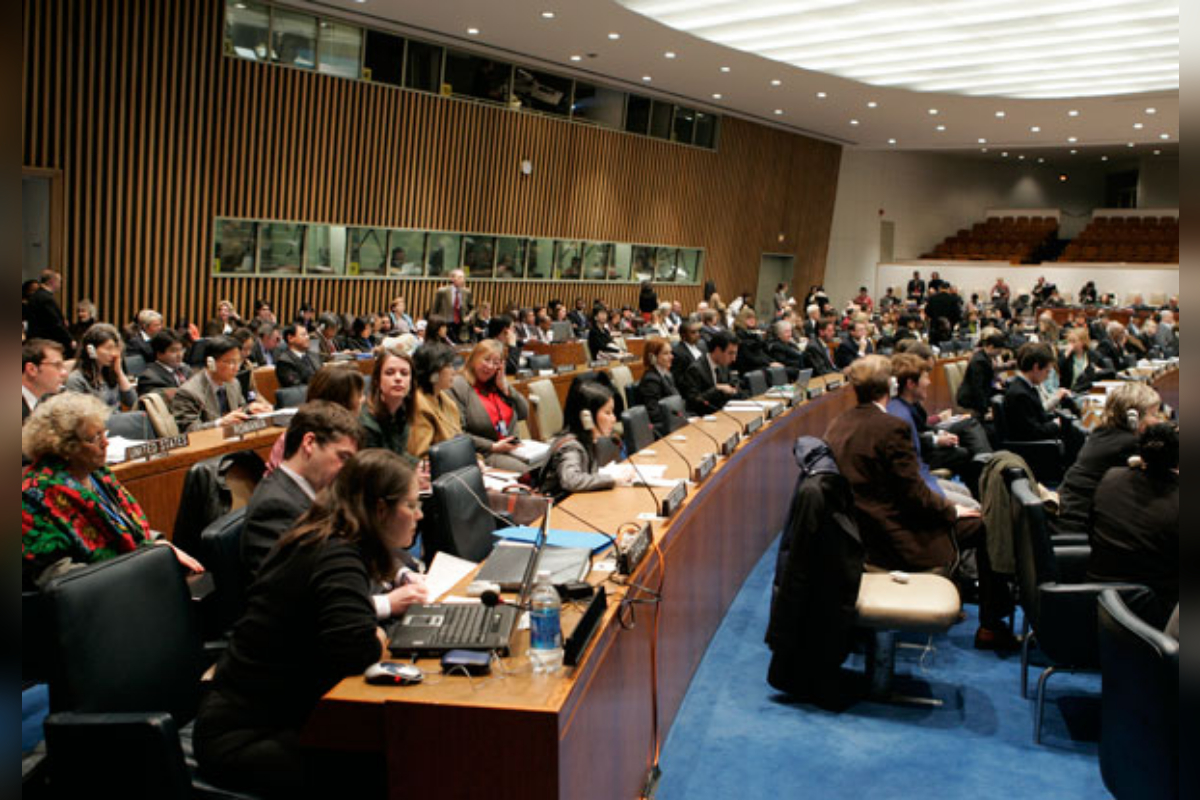
For the first time, an Armenian will serve on the United Nations body responsible for monitoring how countries uphold the rights of persons with disabilities.
Human rights advocate and policy expert Mushegh Hovsepyan has been elected to the U.N. Committee on the Rights of Persons with Disabilities for the 2027-2030 term.
For many in Armenia, the significance of the position was not always accompanied by a clear understanding of what a committee member actually does. “My sister’s daughter proudly announced that her uncle was selected for the UN bookstore,” Hovsepyan said.
The U.N. Committee on the Rights of Persons with Disabilities monitors how countries implement the Convention on the Rights of Persons with Disabilities and whether they are meeting their obligations. Starting in 2027, Hovsepyan and the other Committee members will review state and civil society reports, national human rights institutions and international organizations. They will meet with civil society representatives to understand the problems, then question government representatives and, based on the information, prepare recommendations for states on what they should do before submitting their next reports.
The work is extensive, Hovsepyan said, mostly because the countries and regions are so different. Even understanding how a society defines “disability” can require serious effort.

“Take inclusive education, for example. In Armenia, what does it actually mean? Could it mean special rooms where children are isolated, or are we really talking about inclusion? There are many details like this that require careful understanding. And that is only one part of the committee’s work,” Hovsepyan said.
Another part involves interpreting the convention’s articles and developing general comments. The committee is currently working, for example, on violence against persons with disabilities.
“We have to remember the diversity of countries involved. There are countries that are very authoritarian, both in terms of human rights and politically,” Hovsepyan said. “Then there are states for which this is simply an additional expense. They may not have the resources, or they may not consider it a priority.”
The committee can also consider complaints from individuals and groups under the convention’s Optional Protocol. Armenia ratified the Protocol in 2022. After exhausting domestic remedies, individuals can bring cases before the committee, which in this respect acts somewhat like a quasi-judicial body. The procedure is similar to that of the European Court of Human Rights.
At the same time, committee members cannot participate in discussions or decisions concerning their own countries. If Armenia’s government reports to the committee, for example, Hovsepyan will not be able to take part in examining the country’s case. “It is an ethical issue, a conflict-of-interest issue,” he said.
This is particularly important because committee members are nominated by their states. In some countries, members may also be former or current government officials. Hovsepyan said this can create potential pressure or incentives to influence the issues the committee addresses.
The convention itself uses broad language, which is why the committee’s interpretation matters. In some countries, for example, people with albinism are killed because of traditional beliefs. In others, children with disabilities may receive birth certificates late because their families or authorities assume they will not survive.
The committee can ask states to review such practices and adopt different approaches.
Language is also part of that work. Even supposedly affectionate terms can become labels. “This is also one of the Committee’s priorities. Sometimes government representatives are not sensitive enough to avoid discriminatory terms or statements,” Hovsepyan said. Hovsepyan said governments should not become defensive or make excuses during committee sessions. “The purpose of this committee is not to show how perfect a society we have. It is to acknowledge that one policy has been successful, another has shortcomings, and another has failed for specific reasons and to ask for support and guidance to improve,” he said.
Hovsepyan believes the world is currently experiencing a setback in disability rights, driven in part by conflict and climate change. These issues are increasingly relevant when assessing the rights of people with disabilities.
For Armenia, Hovsepyan’s election means greater visibility to the country in international discussions on disability rights, even as he serves on the committee in an independent expert capacity rather than as a government representative.