


Turkey’s selective justice: Championing Gaza while denying the Armenian Genocide
On October 20, Turkey’s Justice Minister Yılmaz Tunç condemned what he called a “genocide” in Gaza, vowing that those responsible for Palestinian suffering would face justice. Speaking in northern Turkey, Tunç criticized international support for Israel, praised the Gaza ceasefire that began on October 13 and highlighted Turkey’s delivery of over 102,000 tons of humanitarian aid to the blockaded enclave. “Gaza experienced widespread horror and a genocide that continued for more than two years,” he declared, expressing hope that the ceasefire would endure.
As an Armenian American whose great-great-grandfather, Nishan Sarkis Sarkisian, escaped the Armenian Genocide, I find Tunç’s words deeply ironic. Turkey’s vocal advocacy for Palestinian justice contrasts sharply with its refusal to acknowledge the genocide it perpetrated against my ancestors over a century ago. This selective moral stance undermines Turkey’s credibility and reopens wounds for Armenian descendants like me, who carry the weight of an unacknowledged past.
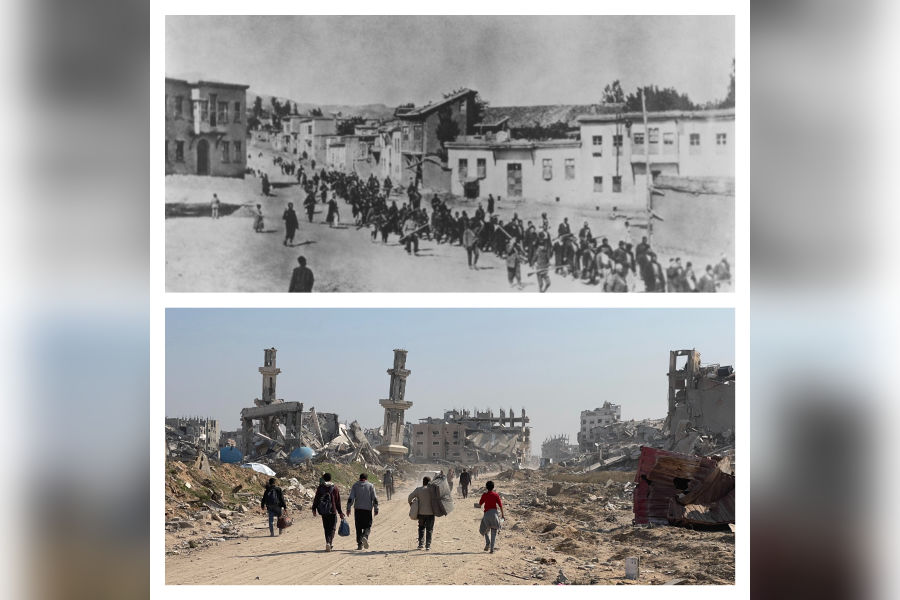
The Armenian Genocide, orchestrated by the Ottoman Empire — Turkey’s predecessor — between 1915 and 1923, claimed approximately 1.5 million Armenian lives through systematic massacres, forced deportations and death marches. My great-great-grandfather fled Kharpert (Harput) in 1905, narrowly escaping the atrocities that followed. Historical records and survivor accounts confirm this as one of the foundational genocides of the modern era.
Yet, Turkey denies these events, dismissing them as “wartime suffering” and punishing those who use the term “genocide” within its borders. In 2025, marking the 110th anniversary of the genocide’s onset, Turkey continues to silence scholars and activists. When Israeli Prime Minister Benjamin Netanyahu said in a podcast interview that he personally recognizes the Armenian Genocide, Turkey’s Foreign Ministry swiftly condemned him, reaffirming its denial.

How can Turkey demand accountability for Gaza while evading responsibility for the Armenian Genocide?
As of 2025, over 30 countries, including the United States, France and Germany, have recognized the Armenian Genocide. Yet, Turkey lobbies against international resolutions and stifles dissent at home. If Turkey seeks to champion justice for Palestine, it must first reckon with its own history. Recognizing the Armenian Genocide and engaging in dialogue with Armenia is not just a matter of historical truth — it is a step toward moral credibility.
The Gaza ceasefire offers hope, but it also underscores the need for nations to confront their pasts. For Turkey, true justice begins at home. Until then, Tunç’s calls for accountability will ring hollow, a selective cry for justice that ignores the cries of my ancestors.