


The secret UAE–Israel railway project: A silent revolution in the Middle East
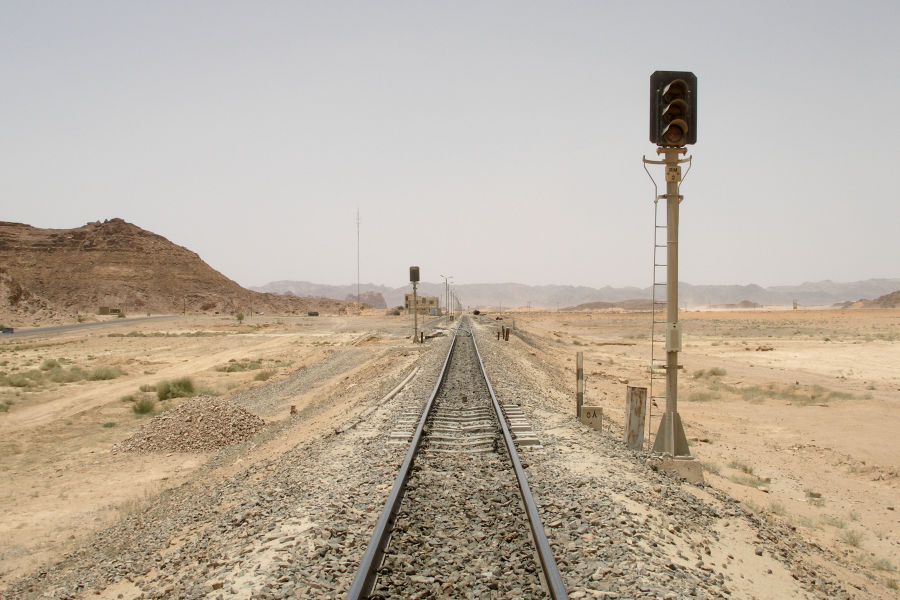
In a region long defined by conflict and cautious diplomacy, a quiet but potentially transformative project is underway: a railway linking the United Arab Emirates (UAE) to Israel. Informally called the “Peace Railway,” it would connect Abu Dhabi to the Israeli port of Haifa via Saudi Arabia and Jordan. If it comes to pass, the railway could reshape trade routes, alliances and regional cooperation in the Middle East, making it a more united and cooperative place in the future.
Strategically, the project is compelling. It would link Gulf ports with the Mediterranean, providing a quicker and safer alternative to the Suez Canal. Shipments from Asia, particularly India, could reach European and American markets faster, bypassing maritime chokepoints and cutting transit times. For the UAE, already a global logistics hub, the railway would strengthen its role as a gateway between East and West. On the other hand, Israel would benefit from Haifa becoming a critical node in continental trade flows.
Economic and strategic implications
The initiative builds on the Abraham Accords, signed in 2020 to normalize relations between Israel and some Arab countries, including the UAE. While the accords initially provoked mixed reactions, they opened the door to unprecedented economic and technological partnerships. The railway is a concrete manifestation of this changed scenario, creating a corridor where humanity and business could cross, and even unite, the two sides of the debate.
Economically, the project offers enormous potential. The UAE would gain direct land access to European markets, while Israel would serve as a vital transit hub. Saudi Arabia and Jordan, though not formal signatories of the accords, would benefit in the form of transit fees, infrastructure investments and a greater say in the region. Moreover, the transportation corridor could also accommodate energy pipelines, fiber-optic networks and renewable energy grids, enabling broader technological integration across the region.
Diplomacy behind closed doors
Recent events point to the fact that the project is advancing slowly and discreetly. In late 2025, Israeli Transport Minister Miri Regev allegedly paid a visit to Abu Dhabi under the guise of secrecy to confer with officials of Etihad Rail, the UAE’s national railway company. The meeting, held amid heightened tensions in Gaza, highlights the difficulty of advancing such proposals without upsetting the public or being insensitive to regional emotions. The railway’s covert nature is indicative of the complex power relations in the Middle East and their impact on the economic and strategic value of cooperation for the governments. On the other hand, public opinion — especially concerning the unresolved Palestinian issue — remains a formidable barrier. Critics argue that the railway could gradually normalize relations between Israel and the neighboring Arab world.
Turkey’s countermove: Reviving the Hejaz railway
In a surprise move that caught regional analysts — and reportedly Israel – off guard, Turkey has come up with an ambitious railway project all its own. In collaboration with Syria and Jordan, Ankara is determined to bring back the Hejaz railway, which ran from Istanbul to the Arabian Peninsula about 100 years ago. The reconstruction focuses on key sections in Syria and Lebanon, with the aim of creating a north-south route that will bypass Israel entirely.
Turkey’s re-establishment of the iconic Hejaz railway through and around Syria and Lebanon is strategically calculated. The UAE-Israel railway is effectively countered, marking the start of another round of competition for trade routes and regional influence.
In September 2025, Turkish Minister of Transport, Abdulkadir Uraloğlu, announced that Turkey would help rebuild the 30 kilometers of track needed to link Damascus to the Turkish rail system. Jordan is offering technical assistance, while Lebanon is expected to benefit from potential future expansions, including a connection to Beirut. The project not only strengthens Turkey’s regional position, but it also provides a trade route for Arab nations wary of formal ties with Israel.
Competitive corridors, different perspectives
The rise of two opposing railway projects — one backed by the UAE and Israel, and the other supported by Turkey and its neighbors — highlights the increasing rivalry over trade routes and power ties in the Middle East. Both projects are economically attractive and contribute to regional unification, but they demonstrate different political visions: one grounded in the Abraham Accords and U.S.-supported cooperation, the other in a revival of Ottoman-era connectivity and a multipolar regional order.
Towards a new regional order
The Middle East’s new geopolitical map is not only determined by the challenges of the UAE–Israel railway and the revival of Turkey’s Hejaz line but also by economic pragmatism, strategic realignment and a growing tolerance for regional integration. These projects extend beyond physical infrastructure; they reflect the balance of power, the region’s character and the uncertainty of its future. Whether the corridors compete or converge will influence the Middle East’s direction for decades to come.
The ongoing railway rivalry between Israel and Turkey is not merely logistical — it is a battle over the region’s future vision. Israel is pushing the concept of a Western-oriented, technologically advanced and economically liberal integration through its partnership with the UAE and the indirect framework of the Abraham Accords. Turkey, in contrast, is reviving its past connections and presenting a multipolar option based on cultural closeness, strategic location and a reconstructed history of the region.
In this railway endeavor, both countries are connecting not only deserts and borders but also their ambitions for the Persian Gulf’s future. The moment the rails are laid, the question will no longer revolve around the speed of goods transportation but who will dictate the storyline of the Middle East.